Disclosure: This post may contain affiliate links. If you purchase through one of my links, I may earn a commission at no extra cost to you. I only recommend resources I believe can be useful to my readers.
There’s a very specific kind of tired that hits around 6 p.m. on a weeknight — the kind where you open the fridge, stare at a bag of spinach that’s seen better days, and think, “I really don’t want another sad salad.” If you eat mostly vegetarian, you probably know this feeling well. It’s easy to fall into a loop of the same three meals because they’re the only ones that don’t require much thought.
That loop is exactly why this Vegetarian Burrito Bowl has become one of my most-made dinners. It’s not fancy, and it doesn’t pretend to be. It’s rice, beans, vegetables, and toppings, all layered together in a way that actually feels like a full meal instead of a plate of sides. I can build it almost entirely from pantry staples — rice, black beans, corn, bell peppers, avocado, salsa, a little lettuce, a squeeze of lime, and whatever herbs or spices I have around.
What I love most is how flexible it is. Some nights I roast the vegetables because I have the time. Other nights I just sauté everything in one pan because I’m hungry and impatient. The bowl still works either way, and that’s the point. It’s built to adapt to your schedule, your fridge, and your mood, not the other way around.
It’s also one of those recipes that scales up beautifully for the week ahead. I regularly make a big batch on a Sunday and portion it into lunches, which means my future self doesn’t have to think about food at all on a Tuesday afternoon. If you’re looking for a vegetarian dinner that’s actually filling, easy to customize for pickier eaters or different diets, and doesn’t ask much of you after a long day, this is the one I keep coming back to.
Why I Love This Vegetarian Burrito Bowl
I make some version of this bowl almost every week, and it’s not because I’m trying to be virtuous about eating more plants. It’s because it solves a lot of small, annoying dinner problems at once.
- The ingredients are simple. I’m not hunting down anything unusual. Rice, canned beans, frozen corn, a couple of fresh vegetables — that’s most of it.
- It’s genuinely affordable. Beans and rice are two of the cheapest sources of calories and protein you can buy, and a few fresh toppings go a long way.
- It’s actually filling. I used to eat vegetarian meals that left me hungry an hour later. This one doesn’t, mostly because of the combination of beans, rice, and healthy fat from the avocado.
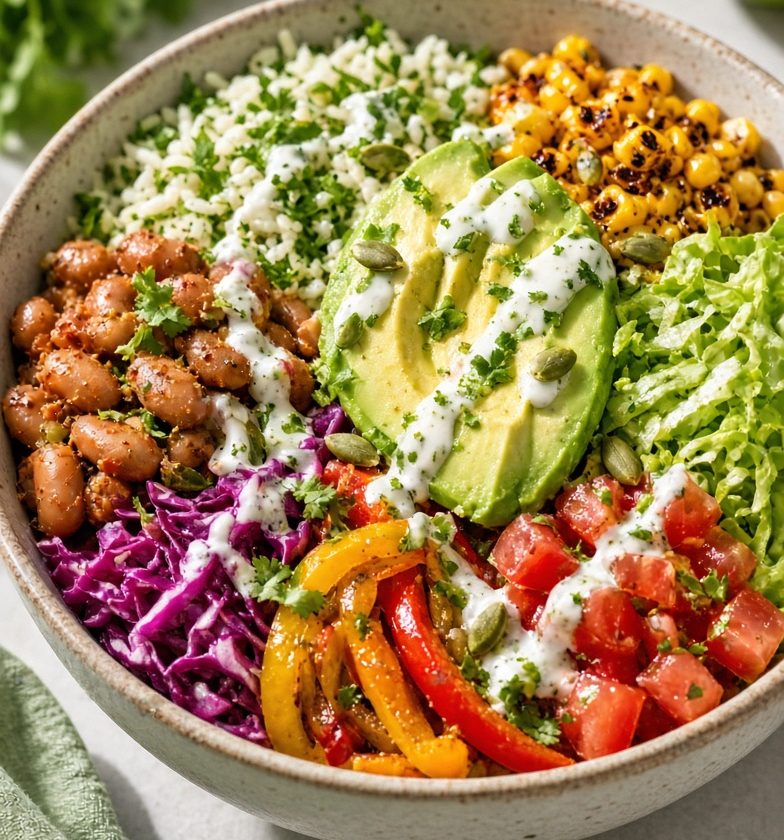
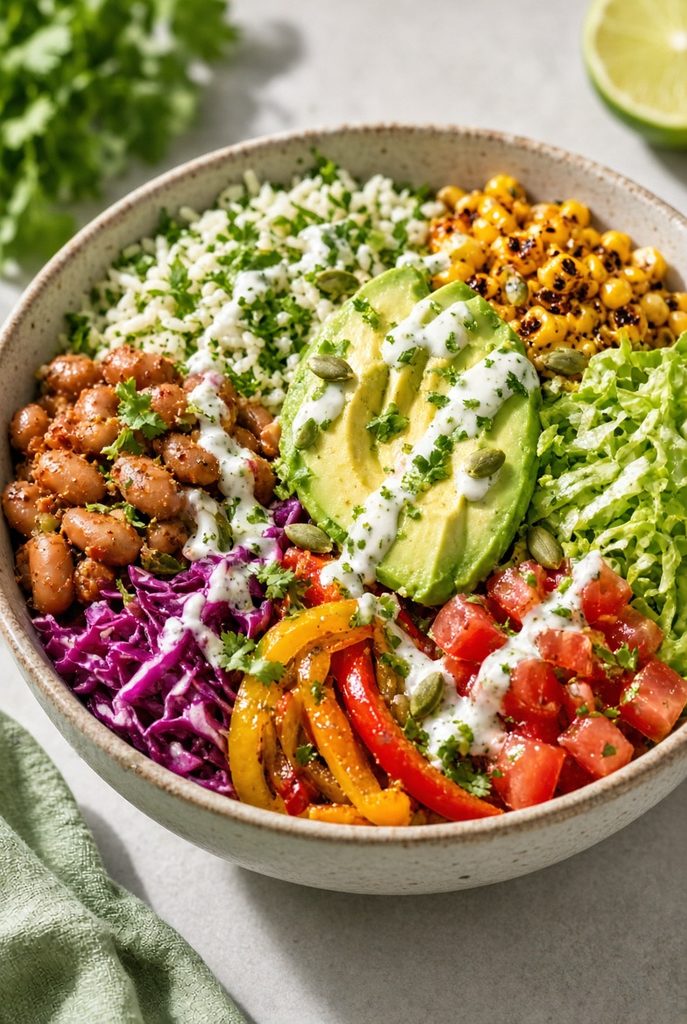
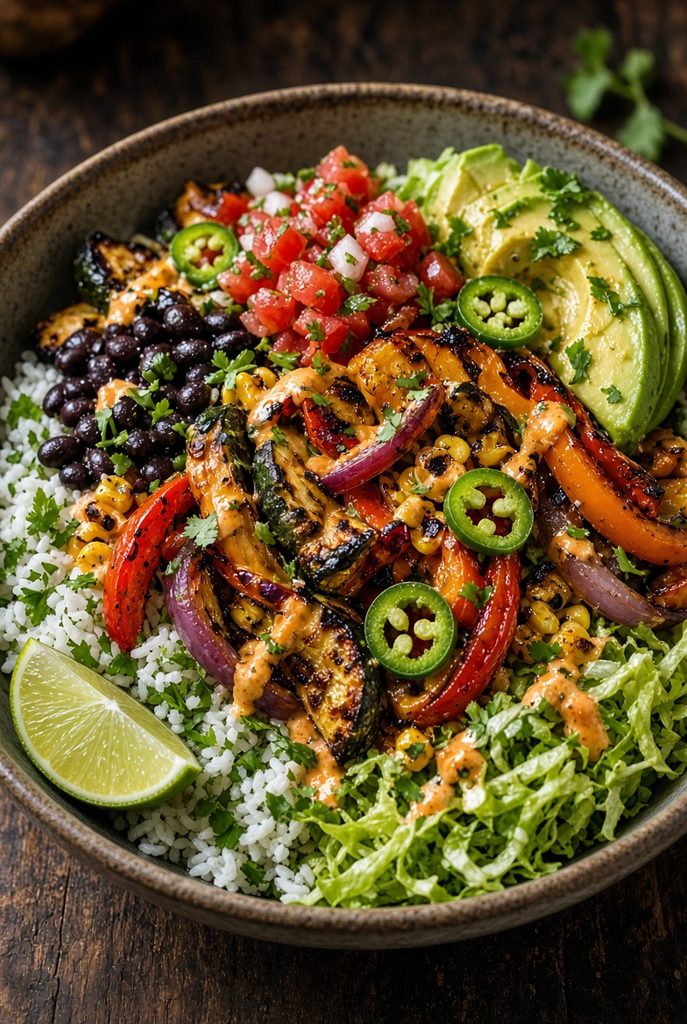
- It’s colorful and it looks like effort even when it isn’t. Bright peppers, dark black beans, green avocado — it photographs well and it just makes the meal feel more appealing.
- It’s endlessly customizable. Everyone at my table can build their own version depending on how spicy or mild they like things.
- It’s meal-prep friendly. I can make a big batch of the components and eat off them for days without getting bored.
- It’s vegetarian, and it’s easy to make fully vegan with one or two small swaps.
- It’s a great way to use up leftover vegetables. Half a bell pepper, some extra corn, a few cherry tomatoes that need to be used — they all work here.
- It’s realistic for busy weeknights. Once the rice and beans are seasoned, assembly takes minutes.
If you’re anything like me, the recipes that stick around long-term aren’t the most impressive ones. They’re the ones that solve a real problem on a regular Tuesday. This is that recipe for me.
What Makes a Really Good Vegetarian Burrito Bowl?
Before we get into ingredients, I want to explain the basic formula I use, because once you understand the structure, you can build a great bowl out of almost anything you have on hand.
Base
This is usually rice — white, brown, or even quinoa or cauliflower rice if you want something lighter or grain-free. The base is what makes the bowl feel like a real meal instead of a topping-heavy salad.
Protein
Black beans are my go-to, but pinto beans, chickpeas, lentils, or tofu all work well here. This is the part of the bowl that keeps you full.
Vegetables
Corn, bell peppers, onions, tomatoes, lettuce, or roasted vegetables. I like to include at least one cooked vegetable and one raw one for contrast.
Healthy fats
Avocado or guacamole is classic, but a sprinkle of pumpkin seeds or a drizzle of good olive oil works too.
Flavor
Salsa, lime juice, cilantro, spices, hot sauce, or a simple dressing. This is the layer most people skip, and it’s the one that makes the biggest difference.
A good vegetarian burrito bowl isn’t just about stacking ingredients in a bowl — it’s about making sure every layer brings something different. You want warm and cool, soft and crunchy, mild and spicy. When those contrasts are working together, the bowl feels a lot more satisfying than the sum of its parts.
Ingredients
This makes about 4 hearty servings.
Cilantro-Lime Rice
- 1 cup long-grain white rice (or brown rice, or cauliflower rice for a lighter option)
- 1¾ cups water or vegetable broth
- 1 tablespoon olive oil
- Juice of 1 lime
- ¼ cup chopped fresh cilantro
- ½ teaspoon salt
Seasoned Black Beans
- 1 can (15 oz) black beans, drained and rinsed (or 1½ cups cooked)
- 1 tablespoon olive oil
- 1 clove garlic, minced (or ½ teaspoon garlic powder)
- ½ teaspoon ground cumin
- ½ teaspoon chili powder
- ¼ teaspoon salt, plus more to taste
- 2–3 tablespoons water or vegetable broth
Sautéed or Roasted Vegetables
- 1 bell pepper, sliced (any color)
- ½ red onion, sliced
- 1 cup corn kernels (fresh, frozen, or canned)
- 1 tablespoon olive oil
- ½ teaspoon smoked paprika
- Salt and pepper, to taste
Fresh Toppings
- 1 avocado, sliced or mashed
- 1 cup shredded lettuce or chopped romaine
- 1 cup cherry tomatoes, halved (or ½ cup diced tomato)
- ¼ cup chopped fresh cilantro
- 1 lime, cut into wedges
- Optional: shredded cheese, sour cream, or Greek yogurt
Optional Sauce/Dressing
- ¼ cup plain yogurt or vegan sour cream
- 1 tablespoon lime juice
- 1 tablespoon water (to thin)
- Pinch of salt
- Optional: a small spoonful of salsa or chipotle in adobo for a smoky kick
Why Each Ingredient Matters
It’s easy to treat a recipe like a checklist, but I’ve found that understanding why each ingredient is there makes it much easier to improvise later.
Black beans bring both protein and a creamy texture that holds up well against the rice. They’re also mild enough to take on whatever seasoning you give them, which is why seasoning them properly matters so much — plain canned beans straight from the can taste like very little.
Lime does more work in this recipe than almost anything else. A squeeze at the end brightens the rice, wakes up the beans, and keeps the avocado from browning. If your bowl tastes a little flat, lime is usually the fix.
Avocado adds the creaminess that a bowl of rice and beans is otherwise missing. Without a fat source, this dish can taste dry no matter how well you season it.
Corn adds a little natural sweetness that balances the smokiness of the spices and the acidity of the lime and salsa.
Bell peppers contribute both color and a slight sweetness once they’re cooked, along with some welcome crunch if you leave them a bit firm.
Seasoning the beans — rather than just dumping them in cold from the can — is one of the biggest upgrades you can make to this recipe. It takes two extra minutes and completely changes how the dish tastes.
Rice is the base that makes this filling. It’s what turns a plate of toppings into an actual meal you can eat for dinner and feel satisfied by.
How to Make the Vegetarian Burrito Bowl
Step 1: Cook the Rice
Rinse the rice under cold water until the water runs mostly clear — this removes excess starch and helps prevent gummy rice. Combine the rice with water or broth in a pot, bring to a boil, then reduce to a simmer, cover, and cook for about 15–18 minutes for white rice (closer to 40 minutes for brown rice), or until the liquid is absorbed. Let it sit off the heat, covered, for 5 minutes before fluffing with a fork. Stir in the olive oil, lime juice, cilantro, and salt.
One mistake I used to make was lifting the lid to check on the rice constantly, which lets steam escape and leads to unevenly cooked grains. Now I set a timer and leave it alone.
Step 2: Season the Black Beans
Heat olive oil in a small saucepan over medium heat. Add the garlic and cook for about 30 seconds, just until fragrant. Add the beans, cumin, chili powder, salt, and a splash of water or broth. Simmer for 5–7 minutes, mashing a few of the beans against the side of the pot with a spoon to thicken the liquid slightly. Taste and adjust the salt before serving.
Step 3: Cook the Vegetables
Heat olive oil in a skillet over medium-high heat. Add the bell pepper and onion and cook for 4–5 minutes, stirring occasionally, until they start to soften but still have some bite. Add the corn and smoked paprika during the last 2 minutes so it just warms through rather than overcooking. If you’d rather roast the vegetables, toss them with oil and seasoning and roast at 425°F for about 20 minutes, flipping halfway.
The key to avoiding watery, sad vegetables is not to crowd the pan. If everything is piled on top of itself, the vegetables steam instead of sautéing, and you lose that slightly caramelized edge that makes them taste good.
Step 4: Prepare the Toppings
Slice the avocado just before serving and toss it with a little lime juice to keep it from browning. Wash and chop the lettuce, halve the tomatoes, and chop the cilantro. Cut the lime into wedges.
Step 5: Make the Sauce
Whisk together the yogurt, lime juice, water, and salt until smooth. Adjust the water for a thinner consistency if you want a true drizzle instead of a dollop.
Step 6: Assemble the Bowls
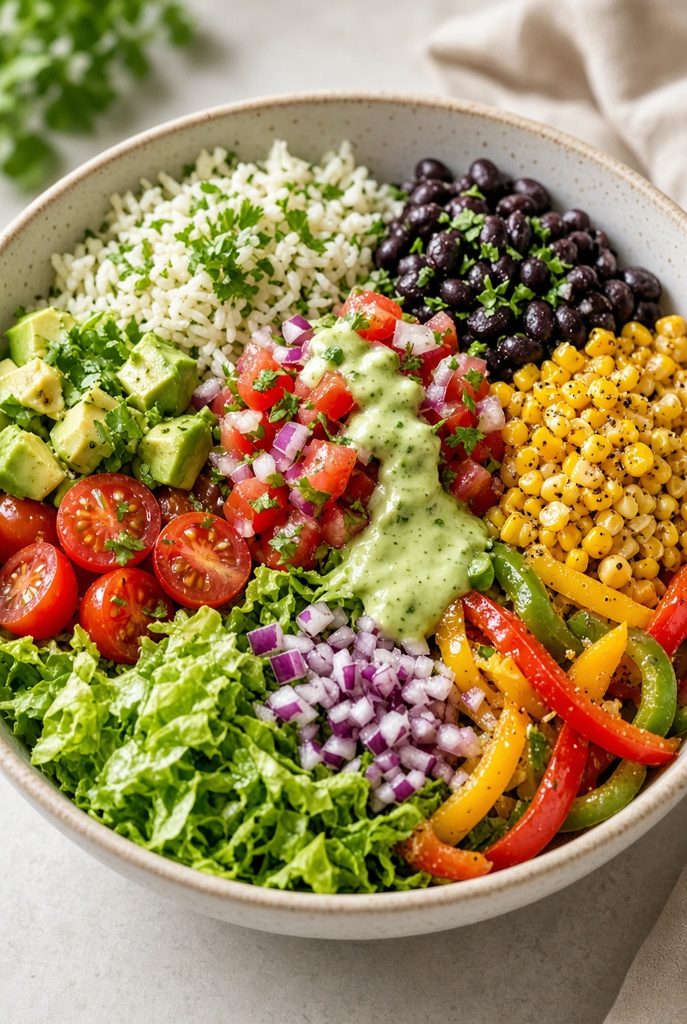
Start with a scoop of the cilantro-lime rice as your base, then add the seasoned black beans on one side and the sautéed vegetables on the other. Layer on the lettuce, tomatoes, and avocado, then finish with a spoonful of salsa, a drizzle of sauce, and a wedge of lime on the side. I like to keep the components somewhat separated in the bowl rather than mixing everything together right away — it makes for a better presentation and lets everyone stir in exactly what they want.
My Best Tips for a Flavor-Packed Bowl
- Season every major component, not just the top. Unseasoned rice under well-seasoned toppings still tastes bland by the third bite.
- Don’t overcook the vegetables. Slightly firm vegetables hold their texture and don’t turn the bowl mushy.
- Add lime at the very end. Lime juice loses some of its brightness the longer it sits, so I save the final squeeze for right before serving.
- Warm the beans before serving, even if you’re eating leftovers. Cold beans on warm rice make for an uneven, less satisfying bite.
- Use freshly chopped toppings whenever you can. Pre-chopped, days-old lettuce or tomatoes noticeably change the texture.
- Don’t overload the bowl with rice. I aim for rice to be about a third of the bowl, not half, so the other flavors have room to come through.
- Add sauce gradually. It’s easy to drown the other flavors if you pour it all on at once.
- Toast your spices briefly in the oil before adding the beans or vegetables — it only takes 20–30 seconds and deepens the flavor significantly.
- Keep avocado fresh with lime juice, especially if you’re prepping it ahead of time.
- Add something crunchy. Tortilla strips, crushed tortilla chips, or pepitas give the bowl some textural contrast that keeps it interesting.
How to Make This Vegetarian Burrito Bowl Higher in Protein
One of the questions I get most often about vegetarian meals is how to make sure they’re actually filling. This bowl already has a solid base of protein from the black beans, but there are a few ways to boost it further depending on what you’re working with.
- Black beans or pinto beans are a reliable, inexpensive protein source and the backbone of this recipe.
- Chickpeas work well roasted for extra crunch, or blended into a quick dressing.
- Lentils can replace or supplement the beans and cook quickly if you’re using the red or yellow variety.
- Tofu, cubed and pan-seared with the same spices used for the beans, adds a satisfying chew.
- Tempeh, crumbled and browned, has a heartier, slightly nutty flavor that holds up well to bold seasoning.
- Edamame can be tossed in alongside the corn for a pop of green and extra protein.
- Quinoa used in place of rice, or mixed half-and-half with rice, adds protein to the base itself.
- Pumpkin seeds sprinkled on top add a little extra protein along with crunch.
Combining a couple of these — beans and quinoa, or beans and pumpkin seeds — is an easy way to build a more substantial bowl without needing to track exact numbers.
Easy Substitutions
I rarely make this exact recipe with every single ingredient on hand, and you probably won’t either. Here’s what I reach for instead:
- Rice → quinoa, cauliflower rice, farro, or even leftover pasta in a pinch
- Black beans → pinto beans, kidney beans, chickpeas, or lentils
- Corn → frozen peas, diced zucchini, or omit entirely
- Bell peppers → poblano peppers, jalapeños (for more heat), or diced carrots for crunch
- Avocado → hummus or a drizzle of tahini for creaminess without avocado
- Lettuce → spinach, shredded cabbage, or arugula
- Salsa → pico de gallo, diced tomatoes with a squeeze of lime, or hot sauce
- Cilantro → parsley, or omit if you’re not a fan (I know it’s divisive)
- Lime → lemon, in a pinch
- Cheese → a dairy-free shredded cheese, or skip it and add extra avocado for creaminess
- Sour cream → plain Greek yogurt, or a dairy-free yogurt alternative
How to Make It Vegan
This recipe is already vegetarian and very close to vegan as written. The only ingredients that might contain dairy are the optional cheese and sour cream. To make it fully vegan:
- Skip the shredded cheese, or use a plant-based alternative.
- Replace the sour cream or yogurt in the sauce with a dairy-free yogurt, or simply skip the sauce and rely on salsa and lime for moisture and flavor.
- Double-check that your salsa doesn’t contain any hidden dairy (most don’t, but it’s worth a glance at the label).
Everything else — the rice, beans, vegetables, and avocado — is naturally plant-based, which is part of why I make this so often. It’s one less thing to think about when I’m cooking for a mixed group of vegetarians, vegans, and everyone else.
How to Make Vegetarian Burrito Bowls for Meal Prep
This is where the recipe really earns its keep. I regularly make a big batch on Sunday and eat from it most of the week, and I’ve learned a few things about doing it well.
What I cook in advance: The rice, the seasoned beans, and the sautéed or roasted vegetables. These all reheat well and don’t lose much texture.
How I portion everything: I divide the rice, beans, and vegetables evenly into 4 airtight containers, keeping them in separate sections if the container allows, or just layered with the rice on the bottom.
What I refrigerate: The rice, beans, and vegetables go straight into the fridge once they’ve cooled to room temperature. They’ll keep well for 4–5 days.
What I keep separate: Avocado, lettuce, tomatoes, and any sauce. These don’t hold up well once they’ve been sitting for days, so I prep them fresh or add them right before eating.
How I store avocado: If I do want to prep it ahead, I toss the cubes generously in lime juice and press plastic wrap directly onto the surface to limit air exposure. Even then, I try to use it within a day or two.
How I reheat the rice and beans: A quick minute or two in the microwave with a splash of water works well, or a few minutes in a covered skillet on the stove if I want to avoid the microwave.
Which toppings should be added right before eating: Avocado, lettuce, tomatoes, cilantro, and any sauce. Adding these right before eating is what keeps the meal-prepped bowls tasting like something you just made, rather than something that’s been sitting in the fridge for three days.
How to prevent sogginess: Keeping the wet, fresh ingredients separate from the warm, cooked ones is the single biggest thing that makes or breaks a meal-prepped bowl. If lettuce sits under warm rice for days, it wilts fast.
A practical example: on Sunday, I’ll cook a double batch of rice and beans, roast a big tray of vegetables, and portion it all into containers. Then I keep a separate small container of chopped lettuce and tomatoes, and I slice fresh avocado each day right before lunch. It takes maybe 10 extra minutes across the whole week and makes a real difference in how good the leftovers taste.
How I Keep the Bowl From Getting Boring
Even a recipe I love can get repetitive if I make it the exact same way every week, so I like to rotate through a few variations.
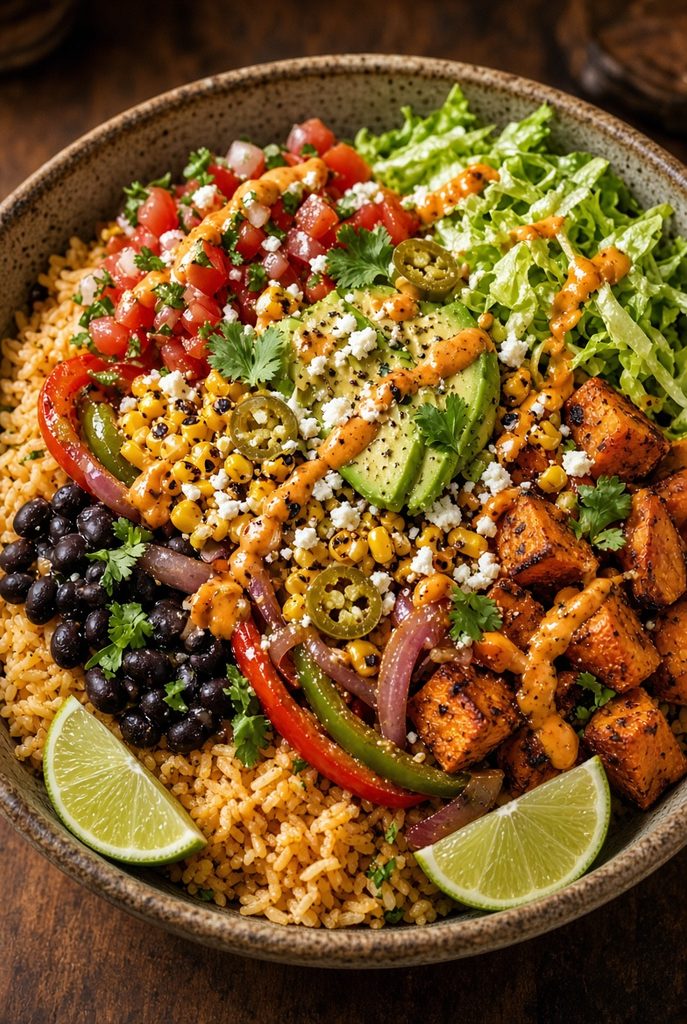
Southwest Burrito Bowl
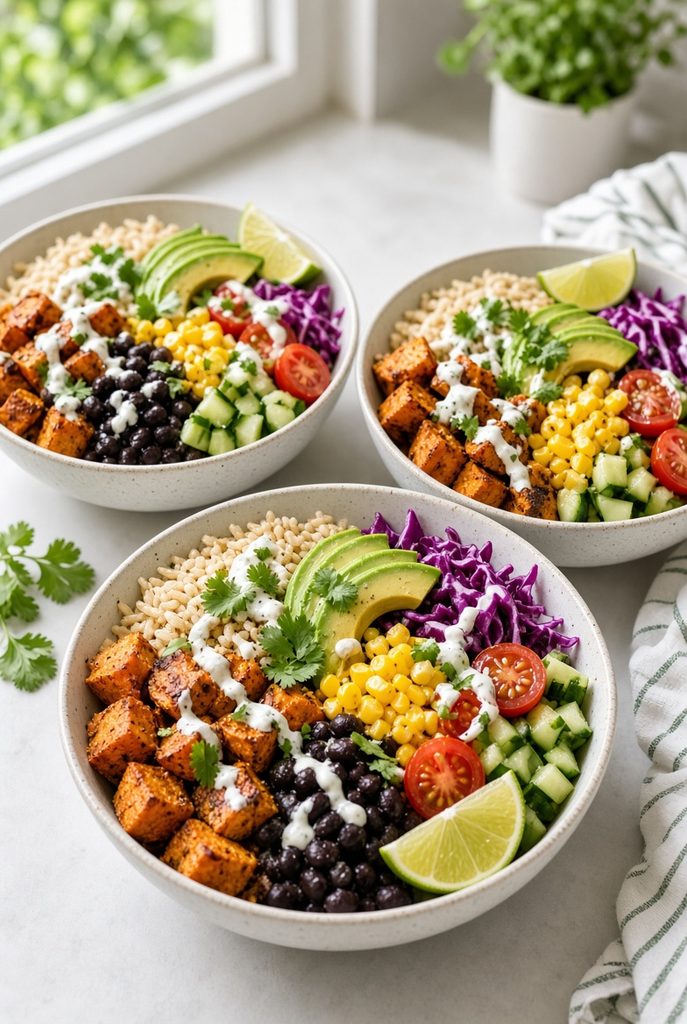
Add roasted sweet potato, black beans, corn, and a chipotle-lime dressing.
Spicy Chipotle Burrito Bowl
Stir a spoonful of chipotle in adobo into the beans or the sauce for a smoky heat.
Sweet Potato Burrito Bowl
Swap half the rice for roasted, cubed sweet potato for extra sweetness and fiber.
Fajita Vegetable Burrito Bowl
Load up on sautéed peppers and onions, cooked with a little extra cumin and chili powder, closer to a classic fajita mix.
High-Protein Burrito Bowl
Use a mix of black beans and quinoa for the base, and add a scoop of pumpkin seeds on top.
Vegan Burrito Bowl
Skip the cheese and dairy-based sauce, and add extra avocado or a cashew-based crema instead.
Fresh Summer Burrito Bowl
Add diced mango or pineapple, extra lime, and a lighter hand on the spices for a brighter, warm-weather version.
Best Burrito Bowl Toppings
Toppings are where you can really make this bowl your own, and I’ve found that grouping them into categories makes it easier to build a balanced bowl instead of grabbing the same two or three things every time.
Fresh toppings: diced tomato, shredded lettuce, chopped cilantro, diced red onion, pico de gallo
Creamy toppings: avocado, guacamole, sour cream, Greek yogurt, queso fresco
Crunchy toppings: tortilla strips, crushed tortilla chips, pepitas, sliced radishes
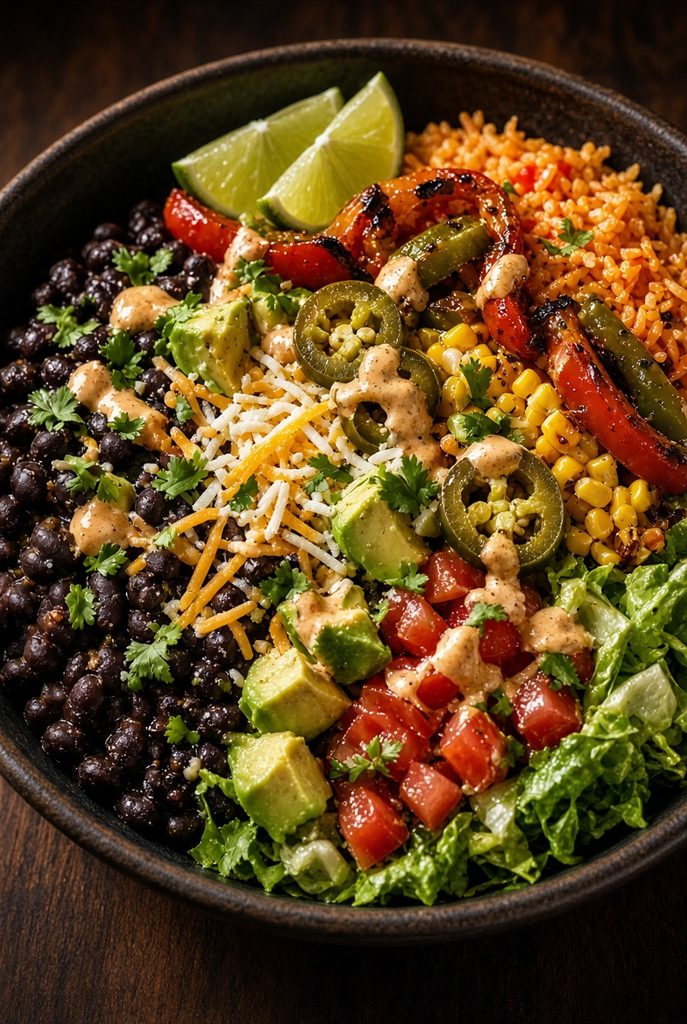
Spicy toppings: jalapeños, hot sauce, chipotle salsa, pickled jalapeños
Saucy toppings: salsa verde, chipotle crema, cilantro-lime dressing, hot sauce
A great bowl usually pulls from at least three of these categories. If you only add creamy toppings, for instance, the bowl can start to feel heavy — a little crunch or acidity balances it out.
Common Mistakes to Avoid
- Bland beans. Beans straight from the can taste like almost nothing. A few minutes of seasoning fixes this completely.
- Overcooked rice. Mushy rice makes the whole bowl feel heavy. Stick to the timing and resist lifting the lid.
- Watery vegetables. This usually comes from overcrowding the pan or cooking them too long. Give them space and pull them off the heat while they still have some bite.
- Too much rice. It’s tempting to fill the bowl mostly with rice since it’s the cheapest ingredient, but it throws off the balance of the whole dish.
- Too much sauce. A little goes a long way. I always start with less than I think I need.
- Adding avocado too early during meal prep. It browns and turns unappetizing within a day. Slice it fresh, or prep it with plenty of lime juice if you must do it ahead.
- Not seasoning individual components. Salting only at the very end means some bites taste great and others taste flat.
I’ve made every one of these mistakes at some point, usually while rushing on a weeknight, and every time the fix has been the same: slow down for the two minutes it takes to season properly.
How to Save Money With This Recipe
This is genuinely one of the more budget-friendly dinners I make, and there are a few ways to stretch it even further.
- Use dried beans instead of canned when you have the time to plan ahead — they’re significantly cheaper per serving.
- Buy rice in bulk. A large bag of rice costs very little per serving compared to smaller packages.
- Use seasonal vegetables. Peppers and corn are cheaper in the summer; in colder months, I’ll lean on frozen corn instead.
- Frozen corn is often cheaper than fresh and works just as well once it’s cooked.
- Make a quick homemade salsa from canned diced tomatoes, onion, and lime instead of buying a jar.
- Repurpose leftovers. Extra roasted vegetables from another meal can go straight into this bowl.
- Only buy the toppings you’ll actually use. It’s easy to overbuy fresh herbs or specialty sauces that end up wasted at the back of the fridge.
What to Serve With a Vegetarian Burrito Bowl
Most of the time, this bowl is a complete meal on its own, but a few sides round it out nicely for a bigger dinner or when I’m feeding a group.
- Tortilla chips with guacamole or salsa on the side for a bit of crunch
- A simple green salad if you want something lighter alongside it
- Fresh fruit, like pineapple or mango, for a sweet contrast
- Homemade salsa or guacamole as a shared appetizer
- A light Mexican-inspired soup, like a simple tortilla soup, for a heartier meal
- Extra roasted vegetables if you want to bulk up the meal without adding more rice
Storage and Leftovers
The rice, beans, and cooked vegetables keep well in an airtight container in the refrigerator for about 4–5 days. I store them separately from the fresh toppings whenever possible, since lettuce, tomatoes, and avocado don’t hold up as well once combined with warm ingredients.
To reheat, I warm the rice, beans, and vegetables together in the microwave or in a covered skillet on the stove, then add the fresh toppings after reheating rather than before. Avocado, lettuce, and any dairy-based sauces are best not reheated at all — add them cold, right at the end.
If I have extra components left over toward the end of the week, I’ll often turn them into a different meal entirely: burrito bowl filling wrapped in a tortilla for a quick burrito, or stirred into a skillet with eggs for a vegetarian breakfast hash.
Frequently Asked Questions
Are vegetarian burrito bowls healthy? This bowl includes a balance of whole grains, plant-based protein, vegetables, and healthy fat from the avocado, which makes it a well-rounded meal. That said, “healthy” depends on your individual needs and portions, so I’d encourage you to build the bowl in a way that fits what works for you.
Can I make this burrito bowl vegan? Yes. Simply skip the cheese and swap the sour cream or yogurt-based sauce for a dairy-free version, or leave the sauce out and rely on salsa and lime instead.
Can I prepare burrito bowls ahead of time? Definitely — this is one of my favorite recipes for meal prep. Cook the rice, beans, and vegetables in advance and store them separately from the fresh toppings, which are best added right before eating.
What is the best rice for burrito bowls? I usually use long-grain white rice for a classic texture, but brown rice, quinoa, or cauliflower rice all work well depending on what you’re looking for.
What can I use instead of black beans? Pinto beans, chickpeas, kidney beans, or lentils are all good substitutes and will absorb the same seasoning nicely.
How can I add more protein? Try adding tofu, tempeh, edamame, or a mix of beans and quinoa. Pumpkin seeds sprinkled on top add a little extra protein as well.
Can I freeze burrito bowls? The rice and seasoned beans freeze reasonably well for up to about 2 months. I don’t recommend freezing the fresh toppings like avocado, lettuce, or tomato, since they don’t hold their texture after thawing.
How long do burrito bowl ingredients last in the refrigerator? The cooked rice, beans, and vegetables generally keep for 4–5 days when stored properly in an airtight container. Fresh toppings like lettuce and tomato are best used within a day or two, and avocado is best added fresh each time.
What toppings go best with burrito bowls? It depends on what you’re in the mood for, but a mix of something fresh (like tomato or lettuce), something creamy (like avocado), something crunchy (like tortilla strips), and something saucy (like salsa) usually makes for the most balanced bowl.
Can I make this recipe gluten-free? Yes, this recipe is naturally gluten-free as written. Just double-check any store-bought salsa, hot sauce, or seasoning blends, since a few brands can include gluten-containing additives.
A Helpful Resource If You Want More Plant-Based Meals
If you’re the kind of person who likes having a rotation of go-to meals rather than scrambling for ideas every night, it might be worth having a solid collection of recipes on hand. One reason I like having a resource like The Complete Plant Based Recipe Cookbook – 200+ Vegan Recipes is that it means not having to search the internet every evening for another plant-based dinner idea — it’s already there, organized and ready to go.
If you’re trying to build a more consistent plant-based meal routine, whether that’s a few dinners a week or a full meal-prep schedule like the one I use for this burrito bowl, having 200+ recipes in one place can take a lot of the daily decision-making out of it.
And if you liked the substitutions and pantry-friendly approach in this recipe, that’s also a big part of what a good plant-based cookbook should offer — practical recipes built around everyday ingredients, not complicated techniques or hard-to-find products.
Conclusion
Eating more vegetarian or plant-based meals doesn’t have to mean settling for boring salads or spending an hour in the kitchen after a long day. This Vegetarian Burrito Bowl is proof of that for me — it’s built from simple, affordable ingredients, it comes together quickly, and it’s flexible enough to fit whatever I have in the fridge or however much time I actually have that evening.
It’s the kind of recipe that earns a permanent spot in a weekly rotation, not because it’s flashy, but because it’s reliable. I can make it for a quick solo dinner, double it for meal prep, or set everything out and let everyone build their own bowl exactly the way they like it. That kind of flexibility is hard to beat on a busy weeknight.
If this burrito bowl becomes a regular in your kitchen, and you’re looking for more easy plant-based recipes to rotate through the week, you can check out The Complete Plant Based Recipe Cookbook – 200+ Vegan Recipes here.
Recipe Card
Vegetarian Burrito Bowl
Prep Time: 15 minutes Cook Time: 30 minutes Total Time: 45 minutes Servings: 4 Category: Main Dish Cuisine: Mexican-Inspired Calories: Approximately 480–550 per serving (estimate only; will vary based on toppings and portion sizes)
Ingredients
Cilantro-Lime Rice
- 1 cup long-grain white rice
- 1¾ cups water or vegetable broth
- 1 tablespoon olive oil
- Juice of 1 lime
- ¼ cup chopped fresh cilantro
- ½ teaspoon salt
Seasoned Black Beans
- 1 can (15 oz) black beans, drained and rinsed
- 1 tablespoon olive oil
- 1 clove garlic, minced
- ½ teaspoon ground cumin
- ½ teaspoon chili powder
- ¼ teaspoon salt
- 2–3 tablespoons water or vegetable broth
Sautéed or Roasted Vegetables
- 1 bell pepper, sliced
- ½ red onion, sliced
- 1 cup corn kernels
- 1 tablespoon olive oil
- ½ teaspoon smoked paprika
- Salt and pepper, to taste
Fresh Toppings
- 1 avocado, sliced
- 1 cup shredded lettuce
- 1 cup cherry tomatoes, halved
- ¼ cup chopped cilantro
- 1 lime, cut into wedges
- Optional: shredded cheese, sour cream
Optional Sauce
- ¼ cup plain yogurt or vegan sour cream
- 1 tablespoon lime juice
- 1 tablespoon water
- Pinch of salt
Instructions
- Rinse the rice, then cook with water or broth according to package timing (about 15–18 minutes for white rice). Fluff and stir in olive oil, lime juice, cilantro, and salt.
- Heat olive oil in a saucepan, add garlic, then stir in black beans, cumin, chili powder, salt, and a splash of water or broth. Simmer 5–7 minutes, mashing a few beans to thicken.
- Heat olive oil in a skillet and cook the bell pepper and onion for 4–5 minutes. Add the corn and smoked paprika and cook 2 more minutes.
- Slice the avocado and toss with a little lime juice. Chop the lettuce, tomatoes, and cilantro.
- Whisk together the sauce ingredients until smooth.
- Assemble the bowls with rice as the base, beans and vegetables on top, followed by the fresh toppings, sauce, and a lime wedge.
Notes
- To make this recipe vegan, skip the cheese and use a dairy-free yogurt or sour cream in the sauce.
- Swap the rice for quinoa or cauliflower rice for a different base.
- For meal prep, store rice, beans, and vegetables together in airtight containers for up to 4–5 days, and keep avocado, lettuce, tomato, and sauce separate, adding them fresh right before eating.
- Leftover components can be wrapped in a tortilla for a quick burrito or added to a skillet with eggs for a fast breakfast hash.
Nutrition (Estimate Only)
Approximately 480–550 calories per serving, with roughly 14–16g protein, 60–65g carbohydrates, and 18–20g fat, depending on toppings used. This is an estimate based on standard ingredient values and not a lab-tested calculation.