
Disclosure: This post contains affiliate links. If you purchase through one of my links, I may earn a small commission at no additional cost to you.
Why This Recipe Exists
The first time I tried to make French toast for a house full of people, I stood at the stove for forty-five minutes flipping individual slices while everyone else sat at the table eating without me. By the time I finally got a plate, the coffee was cold and I was too tired to enjoy it. That was the last time I made French toast the traditional way for a group.
Pumpkin French toast casserole solved that problem completely. I assemble it the night before, slide it into the oven in the morning, and actually get to sit down and eat with everyone else. No skillet, no standing, no last person getting cold food.
I started making a pumpkin version specifically because I wanted something that felt like fall without turning into a pumpkin pie for breakfast. The pumpkin puree adds color, moisture, and a mellow squash flavor that plays well with the warm spices, but it doesn’t take over the dish the way a heavier pumpkin dessert would. It still tastes like French toast first, pumpkin second.
What took me longer to figure out was texture. My early attempts were either soggy in the middle or dry around the edges, and it took a handful of tries to understand what was actually happening — mostly that bread choice and soak time matter far more than people expect. I’ll walk through exactly what I learned, including the mistakes, so you don’t have to repeat them.
This is a genuinely make-ahead recipe. I usually build it the night before a holiday morning or a weekend when I have guests, then bake it fresh. The kitchen fills with the smell of cinnamon and toasted pecans while it bakes, which is honestly half the reason I keep making it.
Quick Recipe Overview
- Prep time: 20 minutes
- Soak time: Minimum 1 hour, ideally overnight (8–12 hours)
- Bake time: 45–55 minutes
- Total time: About 1 hour 15 minutes active/hands-on time, plus soaking
- Servings: 8–10
- Difficulty: Easy, but timing-dependent
- Best occasions: Thanksgiving morning, Christmas morning, weekend brunch, overnight guests
- Make-ahead: Yes — this recipe is built around making it ahead
Why I Keep Coming Back to This Recipe
There are a few reasons this has become my go-to fall breakfast.
I don’t have to babysit it. Once it’s in the oven, I can set a timer and walk away, which is not something I can say about stovetop French toast.
It feeds a crowd without multiplying my workload. Whether I’m cooking for four people or ten, the effort is basically identical — I’m not making batch after batch of individual slices.
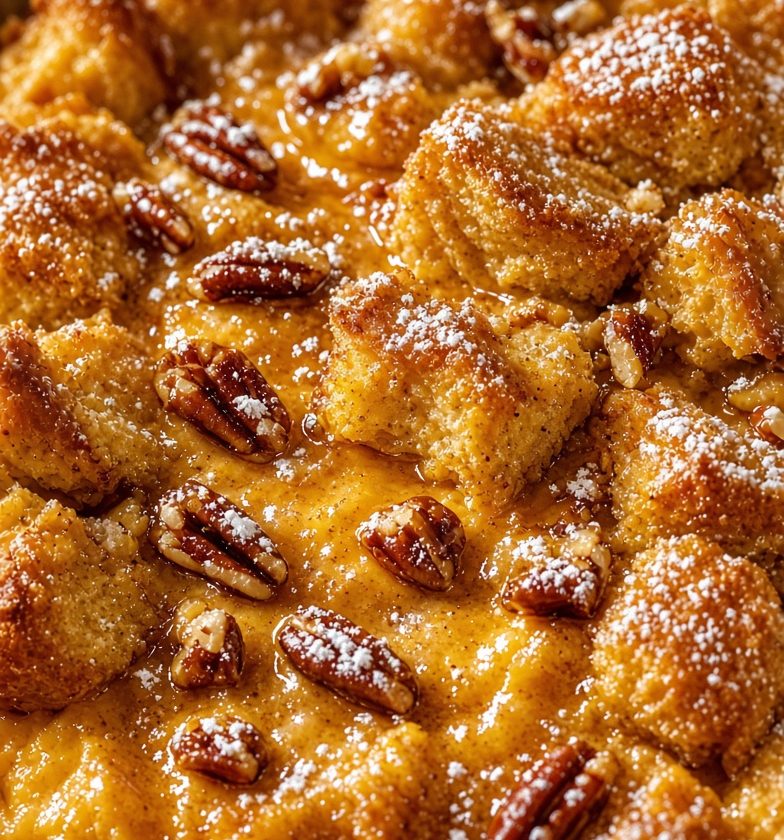
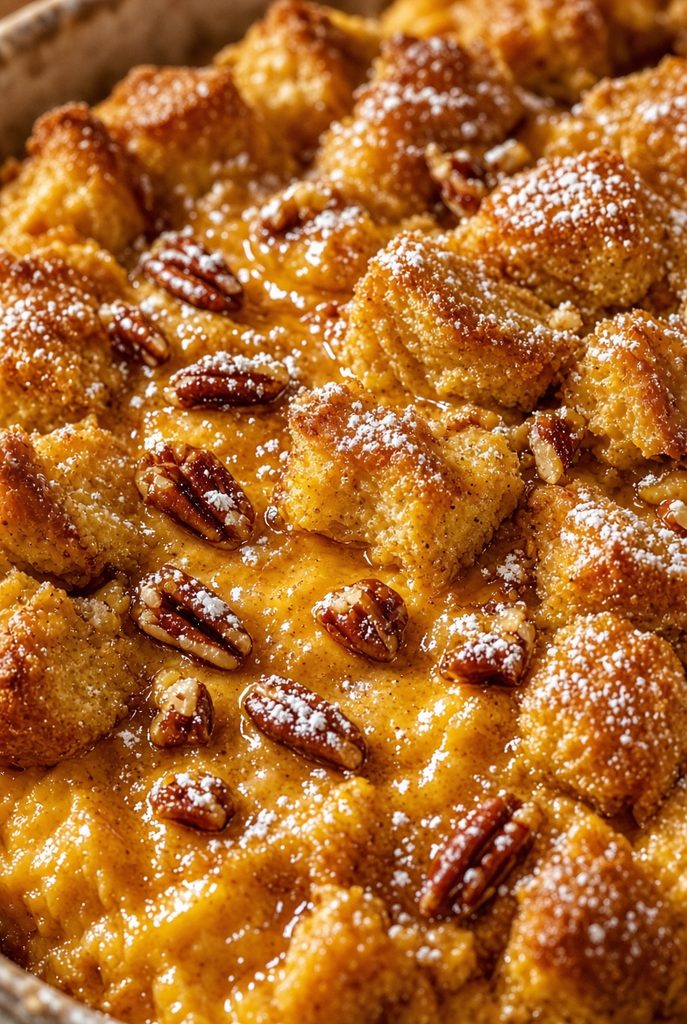
The texture contrast is what sells people on it. The inside is soft and custardy, almost like bread pudding, while the top has a layer of buttery, cinnamon-flecked pecan streusel that stays crisp even after baking.
Cleanup is minimal. One baking dish, one bowl for the custard, one bowl for the topping. That’s it.
And selfishly, I like that I get to eat breakfast warm, at the same time as everyone else, instead of standing at the stove while my food goes cold.
Ingredients
For the Bread
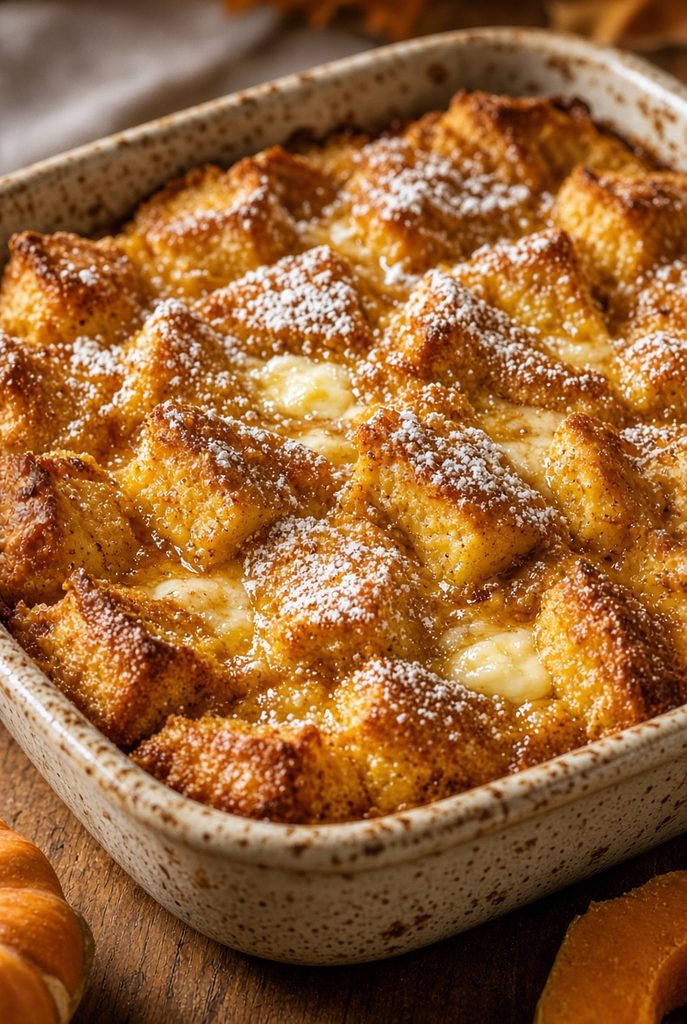
6 cups cubed bread (about 1-inch cubes), preferably slightly stale. The bread is what makes or breaks this casserole. I explain why in detail in the next section, but in short: bread that’s had a day or two to dry out slightly absorbs the custard evenly without turning to mush. Fresh bread absorbs unevenly and can leave you with gummy pockets.
For the Pumpkin Custard
- 1 cup pumpkin puree (not pumpkin pie filling) — Pumpkin puree gives you control over sweetness and spice. Pumpkin pie filling is pre-sweetened and pre-spiced, which throws off the balance of the recipe and can make the casserole overly sweet or muddy in flavor.
- 6 large eggs — Eggs are the backbone of the custard. They’re what set the casserole and give it that soft, bread-pudding-like structure rather than leaving it wet.
- 2 cups whole milk — Whole milk gives the richest texture. You can use a lower-fat milk, but the casserole will be slightly less custardy.
- 1/2 cup heavy cream — This is optional but genuinely improves the texture. It adds richness without adding much extra liquid volume.
- 1/2 cup brown sugar, packed — Brown sugar adds a light caramel note that pairs well with pumpkin. White sugar works too, but I prefer the depth brown sugar brings.
- 2 teaspoons vanilla extract — Vanilla rounds out the pumpkin and spice flavors so nothing tastes flat.
- 2 teaspoons pumpkin pie spice — This is your primary spice blend. If you don’t have a pre-made blend, I’ve included a note on building your own below.
- 1/2 teaspoon ground cinnamon — I add extra cinnamon on top of the pumpkin pie spice because I like a more pronounced cinnamon presence than most blends provide on their own.
- 1/2 teaspoon salt — Salt is easy to skip and shouldn’t be. It sharpens the pumpkin and spice flavors and keeps the custard from tasting flat.
If you don’t have pumpkin pie spice on hand, you can combine 1 teaspoon cinnamon, 1/4 teaspoon nutmeg, 1/4 teaspoon ginger, and a pinch of ground cloves.
For the Streusel Topping
- 1/2 cup all-purpose flour
- 1/2 cup brown sugar, packed
- 1/2 teaspoon cinnamon
- 1/4 teaspoon salt
- 6 tablespoons cold butter, cubed — Cold butter is important here. It’s what creates those small, crumbly clusters instead of a flat, melted layer.
- 3/4 cup chopped pecans — Pecans add crunch and a toasted, slightly buttery flavor that complements pumpkin well. Walnuts are a fine substitute if that’s what you have.
The Bread Matters More Than You Think
I used to think any soft, sturdy bread would work fine for a French toast casserole. That’s mostly true, but the freshness of the bread matters just as much as the type.
Brioche and challah are my first choices. They’re rich, slightly sweet, and have an open crumb structure that soaks up custard evenly without falling apart.
French bread or a sturdy sourdough also work well, especially if you want a slightly less sweet base. Sourdough adds a subtle tang that some people really like against the pumpkin spice.
Thick-cut sandwich bread works in a pinch, but it tends to break down faster than a denser loaf, so I’d only reach for it if that’s genuinely what I have on hand.
Here’s the part that actually matters: the bread should be slightly stale, not fresh out of the bag. Fresh bread is still full of moisture, so when you pour custard over it, the bread’s surface gets saturated quickly but doesn’t have room to absorb much more. You end up with a slimy exterior and an underseasoned interior. Slightly dried-out bread has more room to soak up the custard evenly all the way through, which is exactly the texture you want.
If your bread is fresh, don’t worry — you don’t need to plan two days ahead. Cube it and spread the pieces on a baking sheet, then let them sit out uncovered for a few hours, or dry them in a 300°F oven for 10–15 minutes, stirring once halfway through. You’re not trying to toast the bread, just pull some moisture out of it.
How I Make Pumpkin French Toast Casserole
Step 1: Prepare the Bread
Cut your bread into roughly 1-inch cubes. Try to keep the pieces relatively uniform — if some pieces are much smaller than others, they’ll absorb custard faster and turn mushy while the larger pieces are still underseasoned. Spread the cubes evenly in a greased 9×13-inch baking dish.
Step 2: Make the Pumpkin Custard
In a large bowl, whisk the eggs first until they’re fully broken up and slightly frothy, then whisk in the pumpkin puree until smooth. Add the milk, heavy cream, brown sugar, vanilla, pumpkin pie spice, cinnamon, and salt, and whisk until everything is fully combined. Whisking the eggs before adding the other ingredients helps you avoid streaks of unbeaten egg in the finished custard.
Step 3: Soak the Bread
Pour the custard evenly over the bread cubes. Use a spatula to gently press the bread down so every piece makes contact with liquid — this is the step people skip, and it’s the reason some pieces end up dry while others are swimming. Give the dish a gentle shake or two to help the custard settle into the gaps.
Step 4: Refrigerate
Cover the dish tightly with plastic wrap or foil and refrigerate for at least 1 hour, though overnight (8–12 hours) gives the best texture. This resting period is what allows the custard to soak all the way through the bread rather than just coating the surface.
Step 5: Prepare the Topping
I make the streusel separately and keep it refrigerated until baking time, rather than mixing it into the casserole the night before. In a bowl, combine the flour, brown sugar, cinnamon, and salt, then cut in the cold butter with a pastry cutter or your fingers until the mixture forms coarse crumbs. Stir in the chopped pecans. Keeping the topping separate until baking is what keeps it crisp instead of dissolving into the custard overnight.
Step 6: Bake
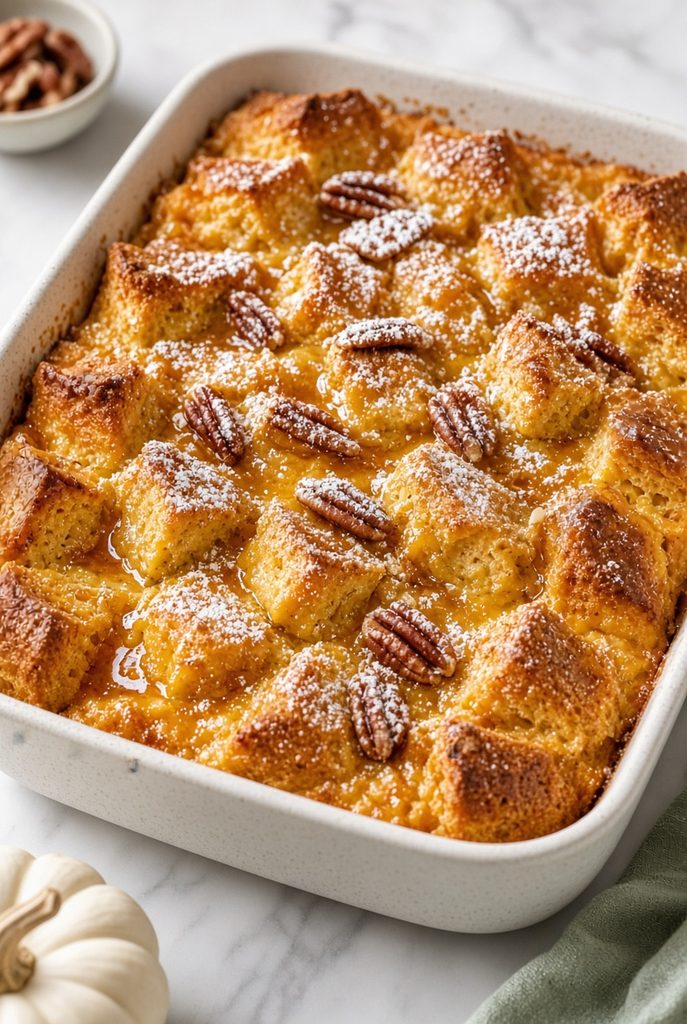
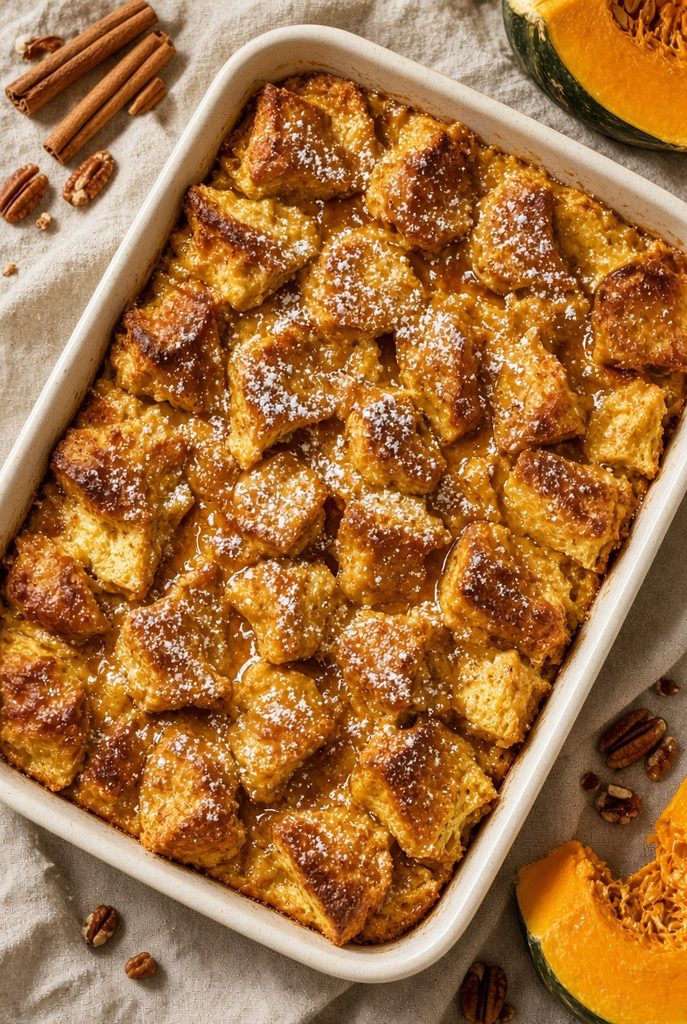
Preheat your oven to 350°F. Remove the casserole from the fridge, sprinkle the streusel topping evenly over the top, and bake uncovered for 45–55 minutes. You’re looking for a deep golden top, a slight puff across the surface, and a center that’s set rather than visibly liquid. If the top is browning too fast before the center is done, loosely tent it with foil for the remaining bake time.
Step 7: Rest Before Serving
Let the casserole rest for 10–15 minutes before serving. This isn’t optional — the custard continues to set as it cools slightly, and cutting into it too early will give you a wetter, less structured slice than if you’d waited.
The Secret to a Non-Soggy French Toast Casserole
This is the section I wish someone had written for me the first time I made this dish, because sogginess was the one problem I kept running into.
The biggest fix is bread choice — slightly stale bread absorbs custard evenly instead of turning to paste, as I covered above. But there are a few other factors that matter just as much.
Don’t over-pour the custard. It’s tempting to think more custard means a richer casserole, but too much liquid relative to bread just means excess moisture that never fully bakes off. Stick to the ratios in this recipe.
Give the bread time to soak properly. Rushing this step is the second most common cause of unevenly textured casserole. An hour is the minimum; overnight is better.
Bake until the center is actually set, not just until the top looks done. The top can look perfectly golden while the center is still loose. If you’re unsure, insert a knife or thin spatula into the center — it should come out mostly clean, without wet, uncooked custard clinging to it.
Don’t cover it for the whole bake. Baking uncovered lets moisture evaporate as the top browns, which is part of what prevents sogginess. Only add foil toward the end if the top is browning faster than the center is cooking.
Here’s how to tell the difference between the outcomes:
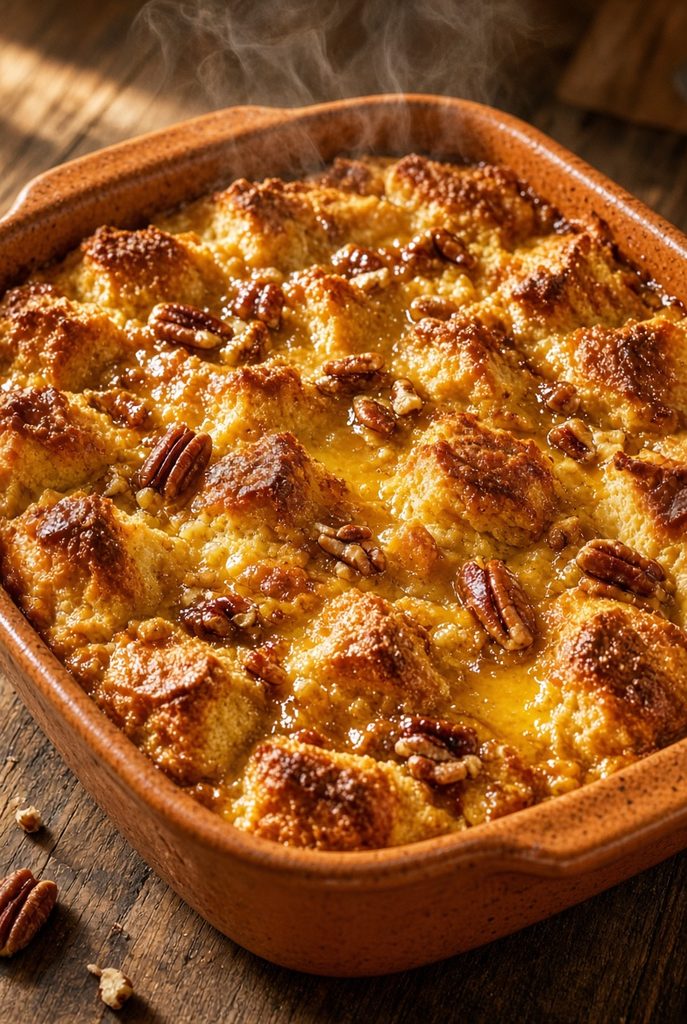
- Properly custardy: Soft, moist, holds its shape when you slice it. Similar to bread pudding.
- Slightly underbaked: The center jiggles slightly and looks a bit shiny or wet. This needs more time in the oven — don’t serve it yet.
- Truly soggy: Waterlogged bread that has lost its structure entirely, usually from too much liquid or bread that was too fresh. Unfortunately, this one usually isn’t fixable once it’s baked; the fix has to happen at the assembly stage.
I don’t recommend eating the casserole while the center still looks wet or the eggs seem undercooked — if you’re unsure, it’s always safer to bake it a bit longer.
How to Know When It’s Done
I rely on a combination of visual cues and a thermometer, especially the first few times I make a new batch of bread.
Look for a deep golden-brown top, slight puffing across the surface, and no areas that look glossy or liquid. When you press the center gently, it should feel set, not jiggly.
If you want certainty, insert an instant-read thermometer into the center of the casserole. It should read at least 160°F, which is the standard safe temperature for baked egg dishes.
Make-Ahead Pumpkin French Toast Casserole
This recipe is genuinely built for making ahead, and it’s the whole reason I make it for holidays and guests.
The night before:
- Cube the bread and let it dry slightly if it’s fresh
- Whisk together the pumpkin custard
- Pour the custard over the bread in the baking dish
- Cover tightly and refrigerate
- Make the streusel topping separately and refrigerate it in its own container
The next morning:
- Remove the casserole from the fridge while the oven preheats — you don’t need to bring it fully to room temperature, but pulling it out early helps it bake more evenly
- Preheat the oven to 350°F
- Sprinkle on the streusel topping
- Bake for 45–55 minutes
- Let it rest 10–15 minutes
- Serve
This timeline is what makes it realistic for Thanksgiving, Christmas morning, or any weekend where I have guests staying over. All the work happens the night before, when I have time to be careful about it, and the morning is just preheat-and-bake.
Can I Make It Without Soaking Overnight?
Yes, though the texture will be slightly different. If you’re short on time, a minimum soak of about 1 hour at room temperature (or slightly longer in the fridge) will still let the bread absorb enough custard to bake properly — it just won’t be quite as deeply custardy as an overnight soak.
If you forgot to prep the night before and need something faster, you can also gently press the bread cubes with a spatula every 10–15 minutes during a shorter soak to help the custard penetrate faster and more evenly.
Common Problems and How I Fix Them
My casserole is soggy
This is almost always a bread or liquid issue. Use slightly stale bread, don’t exceed the custard measurements in the recipe, and make sure you’re baking until the center is fully set rather than pulling it early.
The top is browning too quickly
Loosely tent the casserole with foil for the last 15–20 minutes of baking. This slows down browning on top while the center continues to cook.
The center is still wet
Continue baking in 10-minute increments, checking with a knife or thermometer each time, until the center reads at least 160°F and no longer looks glossy or liquid.
The bread turned mushy
This usually means the bread was too fresh, or it soaked for too long in too much liquid. Stick to slightly stale bread and the custard ratios above.
The casserole is dry
This is less common but can happen if it’s overbaked or if too little custard was used. Make sure the bread is fully coated during the soak, and start checking doneness a few minutes before the suggested bake time if your oven runs hot.
The topping disappeared into the casserole
This happens when the streusel is added too early or mixed into the custard rather than sprinkled on top right before baking. Keep it separate and cold, and add it just before the casserole goes into the oven.
The casserole didn’t absorb the custard evenly
Make sure you’re pressing the bread down gently after pouring the custard, and give the dish a gentle shake to help liquid settle into gaps between pieces.
The flavor isn’t pumpkin-y enough
You can increase the pumpkin puree slightly or add an extra 1/2 teaspoon of pumpkin pie spice, but be cautious — too much pumpkin puree adds moisture that can throw off the texture, so adjust in small increments.
Easy Ingredient Substitutions
Milk alternatives: Oat milk or almond milk both work reasonably well in place of whole milk, though the casserole will be slightly less rich.
Bread alternatives: Gluten-free sandwich bread can work if you need a gluten-free version, though the texture will be somewhat different from brioche or challah.
Nut-free option: Simply omit the pecans from the topping, or replace them with additional streusel crumble or rolled oats for texture.
Dairy-free option: Substitute a plant-based milk and dairy-free butter in the topping. The texture will shift slightly but the recipe still works.
Sweetener alternatives: Granulated sugar can replace brown sugar in the custard, though you’ll lose some of the caramel depth brown sugar provides.
Spice adjustments: If you prefer a stronger spice profile, you can increase pumpkin pie spice slightly, but I’d recommend doing so in small increments so it doesn’t overpower the dish.
Keep in mind that any substitution can shift baking time slightly, so keep an eye on the casserole rather than relying strictly on the clock.
Lower-Carb / Keto-Inspired Option
I want to be upfront: this classic version of Pumpkin French Toast Casserole, made with traditional bread and sugar, is not suitable for a strict ketogenic diet. The bread alone puts it well outside typical keto carb limits.
That said, if you’re following a keto or lower-carb eating pattern, you can adapt this recipe by making a few swaps. Using a keto-friendly bread (usually almond or coconut flour-based) in place of traditional bread is the biggest change, since it dramatically lowers the carb count while still giving you something to soak the custard into. You’d also want to swap the brown sugar for a low-carb sweetener like a monk fruit or erythritol blend, and build the streusel topping with almond flour instead of all-purpose flour.
If you want a resource that goes deeper into keto baking swaps like these, The Ultimate Keto Baking Bundle is a helpful place to start — it’s built specifically around keto-friendly baking recipes and ingredient guidance, which comes in handy if you’re regularly adapting recipes like this one.
Keep in mind that swapping in keto ingredients changes both texture and bake time, so treat the adaptation as its own recipe rather than a one-to-one substitution.
Building a Keto-Friendly Baking Pantry
If you find yourself adapting more fall recipes for a lower-carb lifestyle, it helps to have a few keto baking staples on hand — things like almond flour, a reliable low-carb sweetener, and keto-friendly bread. I’ve found it easier to keep a small stocked pantry of these rather than hunting for substitutes every time I want to bake something. This is another spot where The Ultimate Keto Baking Bundle can be useful, since it’s designed around exactly that kind of keto baking pantry and recipe planning.
Amazon Products That Make This Recipe Easier
9×13-inch baking dish: I like using a sturdy 9×13-inch baking dish because it gives the bread enough room to soak evenly and bake without making the casserole excessively deep.
Large mixing bowl: A wide, deep mixing bowl makes whisking the custard together easier without splashing it everywhere.
Whisk: A sturdy balloon whisk gets the eggs and custard fully combined without lumps.
Measuring cups and spoons: Accurate measuring matters more than usual here, since too much liquid is one of the main causes of a soggy casserole.
Pastry cutter: This makes quick work of cutting cold butter into the streusel topping, which is what gives you those crumbly clusters instead of a flat, melted layer.
Kitchen thermometer: An instant-read thermometer takes the guesswork out of knowing when the center is fully set.
Airtight food-storage containers: Useful for keeping leftovers fresh in the fridge without drying out.
As an Amazon Associate, I may earn from qualifying purchases made through these links.
What to Serve with Pumpkin French Toast Casserole
I usually round out the meal with a mix of something fresh and something savory. Fresh fruit like sliced apples, pears, or pomegranate seeds adds brightness against the richness of the casserole. A dollop of Greek yogurt or whipped cream on top is a nice touch for guests. On the savory side, crispy bacon or breakfast sausage balances out the sweetness nicely, and a side of scrambled eggs rounds out the plate if you’re feeding a hungry crowd. Coffee or chai tea are my go-to drinks alongside it.
If you’re serving a keto or lower-carb version, keep in mind that some of these — particularly fruit and traditional whipped cream — may not fit a strict low-carb approach, so stick to sugar-free whipped cream or skip the fruit if that matters to you.
Topping Ideas
Beyond the pecan streusel built into the recipe, a few additional toppings can change the character of the dish. Chopped walnuts are a straightforward swap for pecans if that’s what you have. A drizzle of warmed cream cheese thinned with a little milk adds a tangy contrast to the sweetness. Pumpkin seeds add crunch with a slightly different flavor than pecans. Sugar-free syrup works well if you’re keeping things lower in sugar, and an extra dusting of cinnamon just before serving brightens up the whole dish.
Storage
Leftovers keep well in the refrigerator for up to 3–4 days when stored in an airtight container. I like to portion it into individual servings before storing, which makes reheating faster and more even.
To reheat, I use the oven when I have time — 300°F for about 10–15 minutes, covered loosely with foil, keeps it from drying out. For a quicker option, the microwave works fine for a single serving; just heat in 30-second intervals and check to avoid drying out the edges.
Freezing
Yes, this casserole freezes reasonably well, though I’ll be honest that the texture on reheating is never quite identical to fresh from the oven — the top loses a bit of its crispness.
To freeze, let the baked casserole cool completely, then portion it into individual servings and wrap tightly, or use airtight freezer-safe containers. It keeps well in the freezer for up to 2 months. Thaw overnight in the refrigerator before reheating in the oven at 300°F until warmed through. I don’t recommend microwaving straight from frozen, since the texture ends up uneven.
Frequently Asked Questions
Can I make Pumpkin French Toast Casserole the night before? Yes — this recipe is designed to be assembled the night before and baked fresh in the morning.
What is the best bread for French toast casserole? Brioche and challah are my top picks for their rich flavor and open crumb, though sturdy French bread or sourdough also work well.
Can I use fresh bread? You can, but it will absorb custard less evenly. Dry fresh cubes in a 300°F oven for 10–15 minutes before using them.
Why is my French toast casserole soggy? Usually it’s from bread that was too fresh, too much custard, or an undercooked center. Slightly stale bread and baking until the center is fully set both help.
Can I freeze Pumpkin French Toast Casserole? Yes, though the texture on reheating won’t be quite as crisp as fresh from the oven.
Can I use almond milk? Yes, it works as a substitute for whole milk, though the casserole will be slightly less rich.
Can I make this dairy-free? Yes — use a plant-based milk and dairy-free butter in the streusel topping.
Can I make it gluten-free? Yes, with a gluten-free bread substitute, though the texture will differ somewhat from traditional brioche or challah.
Can I make a lower-carb version? Yes — swapping in keto-friendly bread, a low-carb sweetener, and an almond flour streusel gets you closer to a lower-carb version, though the classic recipe as written is not keto.
How do I reheat French toast casserole? In the oven at 300°F for 10–15 minutes covered with foil, or in the microwave in short intervals for a single serving.
Can I leave out the nuts? Yes, simply omit them or replace with extra streusel crumble or rolled oats.
How do I know when the casserole is done? Look for a golden top, a slightly puffed and set center, and an internal temperature of at least 160°F.
Pumpkin French Toast Casserole (Recipe Card)
Prep Time: 20 minutes Soak Time: 1 hour minimum, overnight recommended Cook Time: 45–55 minutes Total Time: About 1 hour 15 minutes active, plus soaking Servings: 8–10 Course: Breakfast Cuisine: American
Ingredients
Bread:
- 6 cups cubed bread (1-inch cubes), slightly stale
Pumpkin Custard:
- 1 cup pumpkin puree
- 6 large eggs
- 2 cups whole milk
- 1/2 cup heavy cream
- 1/2 cup brown sugar, packed
- 2 teaspoons vanilla extract
- 2 teaspoons pumpkin pie spice
- 1/2 teaspoon ground cinnamon
- 1/2 teaspoon salt
Streusel Topping:
- 1/2 cup all-purpose flour
- 1/2 cup brown sugar, packed
- 1/2 teaspoon cinnamon
- 1/4 teaspoon salt
- 6 tablespoons cold butter, cubed
- 3/4 cup chopped pecans
Instructions
- Grease a 9×13-inch baking dish and spread the cubed bread evenly inside.
- Whisk the eggs until frothy, then whisk in the pumpkin puree until smooth. Add milk, cream, brown sugar, vanilla, pumpkin pie spice, cinnamon, and salt, and whisk until combined.
- Pour the custard evenly over the bread. Press gently to ensure all pieces absorb liquid.
- Cover tightly and refrigerate for at least 1 hour, ideally overnight.
- Combine flour, brown sugar, cinnamon, and salt for the streusel. Cut in cold butter until crumbly, then stir in pecans. Refrigerate separately.
- Preheat oven to 350°F. Sprinkle streusel over the casserole and bake uncovered for 45–55 minutes, tenting with foil if the top browns too quickly.
- Rest 10–15 minutes before serving.
Notes
- Use slightly stale brioche, challah, or French bread for the best texture. Fresh bread can be dried in a 300°F oven for 10–15 minutes first.
- Assemble the night before for a make-ahead breakfast; add the topping and bake fresh in the morning.
- If the center looks wet or glossy after the suggested bake time, continue baking in 10-minute increments and check with a thermometer for 160°F.
- Refrigerate leftovers up to 3–4 days; freeze up to 2 months.
- See substitution and keto adaptation sections above for dietary swaps.
Nutrition
Nutrition information will vary depending on the specific ingredients and brands used.
