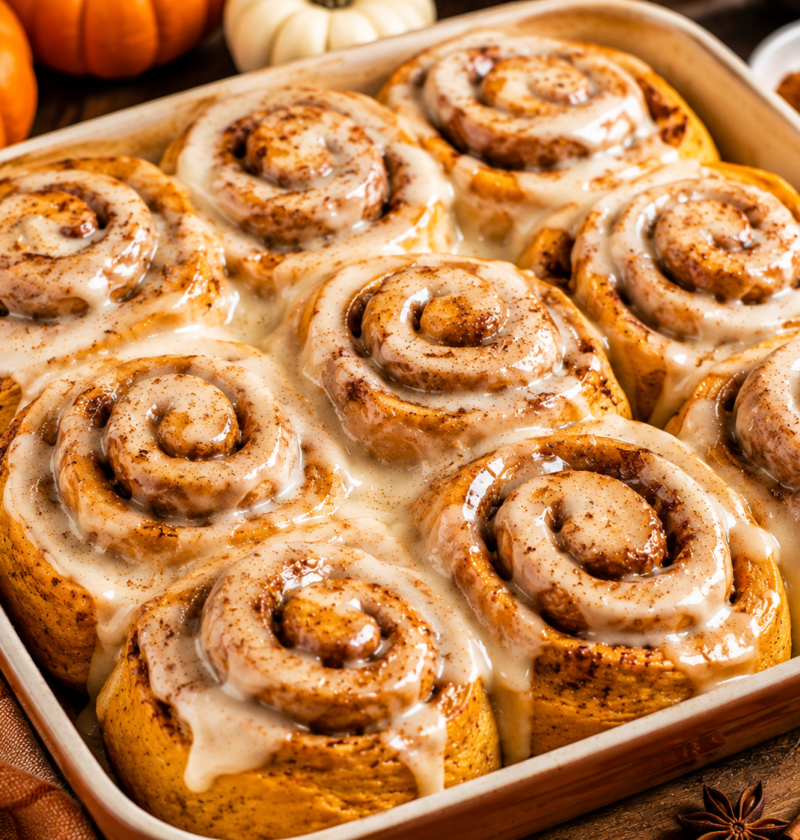
There’s a specific kind of morning I wait for all year. The air finally has that crisp edge to it, my kitchen windows fog up a little from the oven, and the whole house smells like cinnamon, brown sugar, and warm pumpkin spice. That’s the morning I make these pumpkin spice cinnamon rolls.
I’ve made a lot of cinnamon rolls in my life, but this recipe is the one I keep coming back to every autumn. It combines everything I love about a classic homemade cinnamon roll — soft, pillowy dough, a gooey swirl of cinnamon filling, and thick cream cheese frosting — with real pumpkin puree and warm pumpkin pie spice worked right into the dough. The texture stays tender and moist instead of dense or dry, and the pumpkin flavor is present without turning the rolls into pumpkin bread with frosting on top.
I usually make these on a weekend morning when I have time to let the dough rise properly, or I use the overnight method (which I’ll walk you through later) so they’re ready to bake first thing on a holiday morning. Either way, they’re the kind of pumpkin spice cinnamon rolls recipe that turns an ordinary breakfast into something people remember.
If you’ve ever ended up with dense, dry, or gummy homemade cinnamon rolls, this post is going to walk you through exactly why that happens and how to avoid it. I’m not going to just hand you a recipe and wish you luck. I’m going to explain the dough, the rise, the rolling, the baking, and every mistake I made along the way so you don’t have to make them yourself.
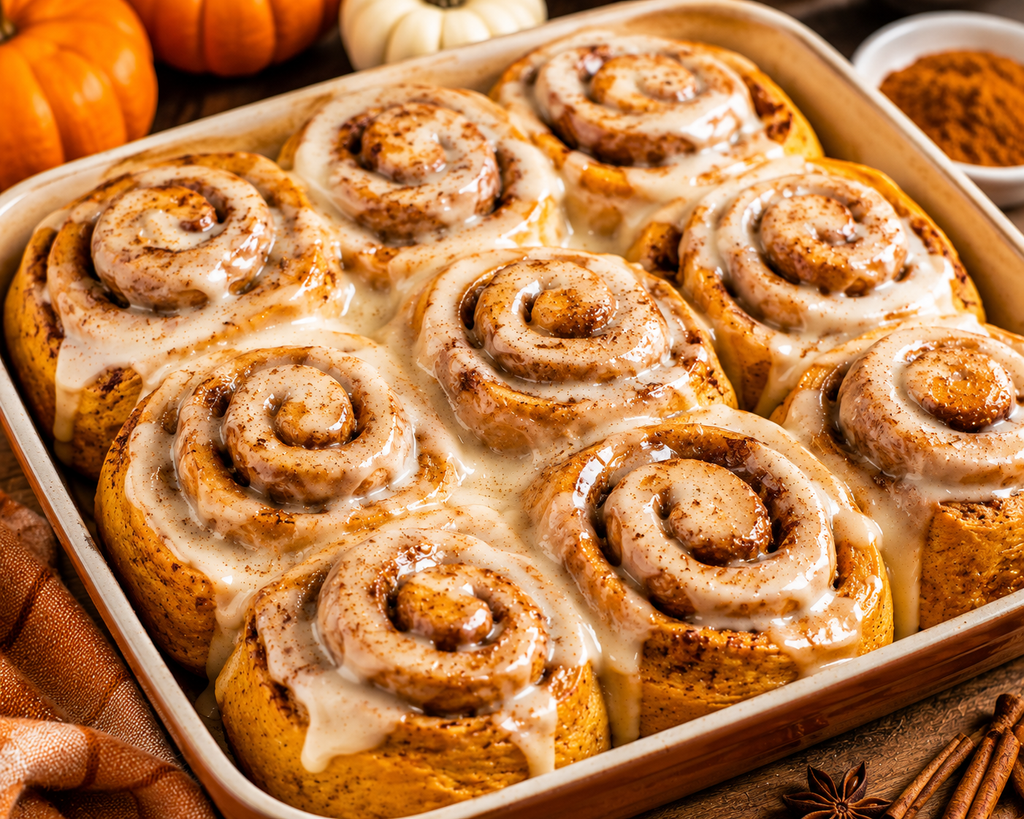
Why I Love These Pumpkin Spice Cinnamon Rolls
What makes this recipe different from a standard cinnamon roll isn’t just the pumpkin. It’s how the pumpkin actually changes the texture of the dough in a good way.
Real pumpkin puree adds moisture and a small amount of natural sugar and fiber to the dough. That extra moisture is part of why these rolls turn out so soft — the dough stays tender even a day or two after baking, which isn’t always true of a plain enriched dough. I add pumpkin pie spice both into the dough itself and into the cinnamon filling, so the flavor builds in layers instead of just sitting on top as a garnish.
A few things I think make this recipe worth the effort:
- The dough is genuinely soft, not tough or bready, because of the pumpkin, butter, and egg working together.
- The filling is generous without being so heavy that it leaks everywhere in the oven.
- The cream cheese frosting is thick enough to hold its shape but soft enough to melt slightly into the warm rolls.
- It’s make-ahead friendly. I almost always prep these the night before for a stress-free morning.
- The pumpkin flavor is balanced. These taste like cinnamon rolls with a cozy fall twist, not like pumpkin puree with sugar on it.
When I first started testing this recipe, my early versions were either too wet from too much pumpkin, or too dry from overcompensating with flour. It took a few tries to land on a dough that was soft, easy to roll, and still held its shape. I’ll explain exactly how to get there.
What Makes These Cinnamon Rolls So Soft?
The softness of a cinnamon roll comes down to a handful of things working together: hydration, fat, sugar, and how the dough is handled. I want to break this down simply, because understanding why the dough behaves a certain way will help you way more than just following steps blindly.
Yeast is what gives the dough its rise and airy texture. As it feeds on the sugar in the dough, it releases carbon dioxide, which gets trapped in the gluten structure and makes the dough expand. If your yeast is old or the liquid you mix it with is too hot, it won’t activate properly, and your rolls won’t rise.
Pumpkin puree adds moisture directly into the dough. Because pumpkin is mostly water and fiber, it makes the dough feel a bit softer and slightly stickier than a plain milk-and-butter dough. That stickiness is actually a good sign — it usually means you don’t need to add extra flour.
Butter and eggs are what make this an “enriched” dough rather than a lean bread dough. Fat coats the gluten strands, which keeps the crumb tender instead of chewy. The egg adds richness and helps the dough hold together while staying soft.
Kneading develops the gluten network that traps gas from the yeast. Under-kneaded dough won’t rise well and can collapse. Over-kneaded dough can get tough. You’re looking for a dough that’s smooth and elastic, not a specific number of minutes on the clock.
Proofing (the rising time) is where the actual volume happens. This is temperature-dependent, so instead of watching the clock, I always watch the dough itself.
Here’s the part I really want you to take away from this section: adding too much flour is the single biggest reason homemade cinnamon rolls turn out dense or dry. Because pumpkin puree adds extra moisture, this dough will naturally look and feel softer and slightly tackier than a traditional cinnamon roll dough. If you keep adding flour until the dough feels totally clean and non-sticky like standard bread dough, you will absolutely end up with rolls that are dry and heavy instead of soft and fluffy.
Instead of relying only on measurements, look for these signs:
- The dough pulls away from the sides of the bowl but still sticks slightly to the bottom.
- When you press it with a floured finger, it slowly springs back.
- It feels soft and a little tacky, not dry or stiff, similar to the texture of an earlobe (I know that sounds strange, but it’s genuinely the best comparison for enriched dough texture).
Ingredients You’ll Need
Here’s what goes into each component of this recipe, why it’s there, and what you can swap if needed.
For the Pumpkin Spice Dough
All-purpose flour — This provides the structure of the dough through gluten development. Start with the lower end of the range in the recipe card and add more only if the dough is unworkably wet. Too much flour is the most common reason homemade cinnamon rolls come out dry.
Pumpkin puree — Use plain canned pumpkin puree, not pumpkin pie filling. This is important enough that I’ll cover it separately below.
Active dry yeast or instant yeast — Either works. Active dry yeast needs to be dissolved in warm liquid first to activate. Instant yeast can be mixed directly into the dry ingredients. If you’re using active dry yeast, check that your milk is warm (around 105–110°F) but not hot, since liquid that’s too hot will kill the yeast.
Warm milk — Adds moisture and helps activate the yeast. Whole milk gives the richest texture, but 2% works fine too.
Butter — Adds richness and softness to the dough. Use unsalted so you can control the salt level.
Egg — Adds structure and richness. Let it come to room temperature before mixing so it blends smoothly instead of cooling down your warm milk mixture.
Granulated sugar — Feeds the yeast and adds a touch of sweetness to the dough itself.
Salt — Balances the sweetness and strengthens the gluten structure. Don’t skip it, and don’t let it touch the yeast directly before mixing.
Pumpkin pie spice — This is what gives the dough its warm, cozy flavor. If you don’t have a pre-made blend, cinnamon, ginger, nutmeg, and cloves combined will get you close.
For the Pumpkin Spice Cinnamon Filling
Softened butter — Needs to be soft enough to spread easily without tearing the dough. Not melted, just softened at room temperature.
Brown sugar — Light or dark both work; dark brown sugar gives a slightly deeper, more molasses-forward flavor.
Ground cinnamon — The backbone of the filling.
Pumpkin pie spice — Adds another layer of warmth on top of the cinnamon.
Chopped pecans (optional) — I add these sometimes for texture, but they’re completely optional if you prefer a classic smooth filling.
For the Cream Cheese Frosting
Cream cheese — Use full-fat block cream cheese, softened. Cream cheese spread from a tub has more moisture and won’t give you the same thick texture.
Butter — Softened, for richness and smoothness.
Powdered sugar — Sweetens and thickens the frosting.
Vanilla extract — Rounds out the flavor.
Milk or cream — Used a tablespoon at a time to loosen the frosting to the right consistency.
Optional maple syrup or pumpkin spice — A small addition if you want extra fall flavor in the frosting itself.
Pumpkin Puree vs. Pumpkin Pie Filling
I want to be really clear about this because it’s one of the most common mistakes people make with any pumpkin recipe. Pumpkin puree is just cooked, pureed pumpkin with nothing else added. Pumpkin pie filling already contains added sugar, spices, and sometimes thickeners, and it’s meant to be poured straight into a pie crust. If you use pumpkin pie filling in this dough, you’ll throw off both the sweetness and the moisture balance, and the dough likely won’t behave the way it’s supposed to. Always check the label and grab plain pumpkin puree.
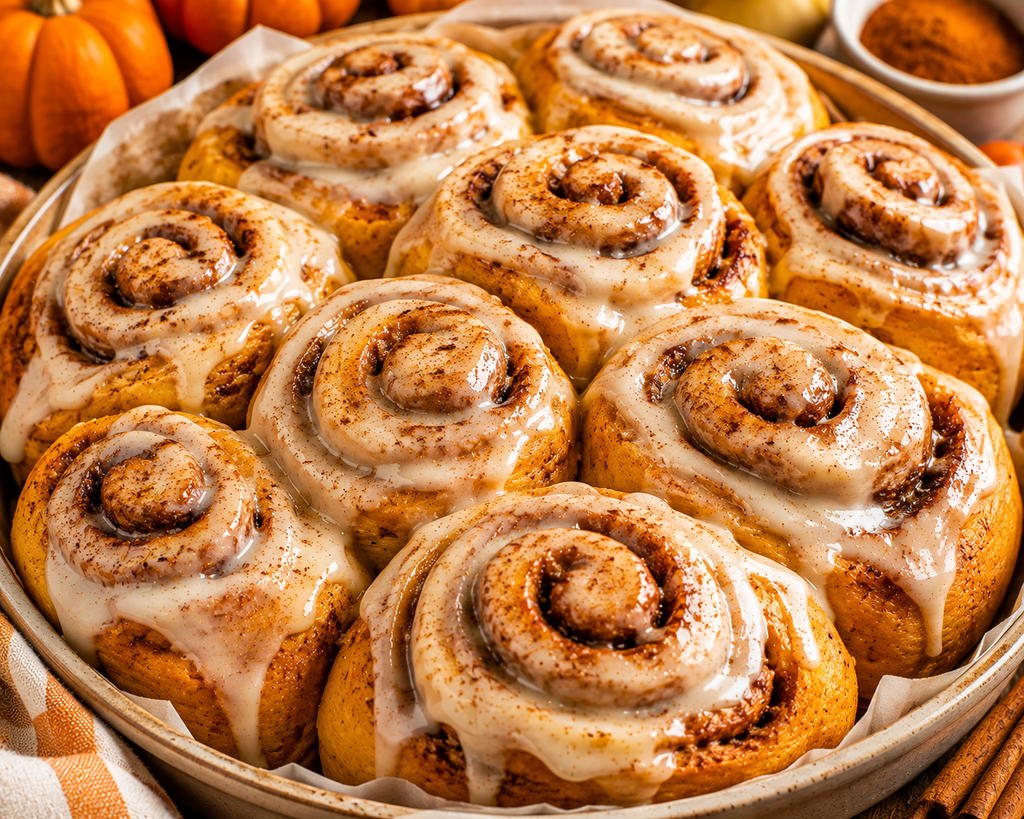
How to Make Pumpkin Spice Cinnamon Rolls
This looks like a long list of steps, but each one is simple. I’ve broken it down this way so you always know exactly what you’re looking for before moving to the next step.
Step 1: Prepare the Yeast
Warm your milk until it feels like a warm bath, around 105–110°F. If it’s too hot to comfortably hold your finger in, let it cool slightly before adding the yeast. Stir in a pinch of the sugar and the yeast, then let it sit for 5–10 minutes. It should look foamy and slightly puffed on top. If nothing happens, your yeast is likely dead or your liquid was too hot, and you’ll want to start over with a fresh batch.
Step 2: Make the Pumpkin Dough
In a large bowl, whisk together the pumpkin puree, melted (but not hot) butter, egg, sugar, and pumpkin pie spice. Pour in the foamy yeast mixture and stir to combine. Add the flour and salt gradually, mixing until a shaggy dough forms.
Step 3: Knead the Dough
Knead by hand on a lightly floured surface, or with a stand mixer fitted with a dough hook, for about 7–9 minutes. The dough is ready when it’s smooth, elastic, and only slightly tacky to the touch. It should stretch without tearing immediately.
Step 4: First Rise
Place the dough in a lightly greased bowl, cover it, and let it rise in a warm spot until doubled in size. This usually takes 60–90 minutes, but it depends heavily on the temperature of your kitchen. Instead of watching the clock, press two fingers gently into the dough — if the indentation slowly springs back partway and stays, it’s ready.
Step 5: Make the Pumpkin Spice Filling
Mix the softened butter, brown sugar, cinnamon, and pumpkin pie spice into a spreadable paste. It should hold together but still spread easily without tearing the dough underneath.
Step 6: Roll the Dough
Turn the risen dough out onto a floured surface and roll it into a rectangle roughly 16 by 12 inches. Aim for even thickness throughout so the rolls bake evenly. Spread the filling all the way to the edges on the long sides, but leave about half an inch bare along one long edge to help the roll seal.
Step 7: Cut the Rolls
Roll the dough up tightly starting from the long edge with filling all the way to the border, ending at the bare edge so the seam sits on the bottom. Use unflavored dental floss to cut clean rolls: slide a length of floss under the log, cross the ends over the top, and pull to slice through without squashing the dough. A very sharp knife works too, just use a gentle sawing motion.
Step 8: Second Rise
Arrange the rolls in a greased baking dish with a little space between them, cover, and let them rise again until puffy and touching, about 30–45 minutes. They won’t double the way the first rise did, but they should look visibly larger and soft.
Step 9: Bake
Bake at 350°F for about 22–28 minutes, until the tops are golden and the centers no longer look raw or doughy. If the tops are browning too quickly, tent the pan loosely with foil for the last few minutes. The rolls are done when a thermometer inserted into the center reads around 190°F, or when the middle rolls spring back lightly when pressed.
Step 10: Make the Cream Cheese Frosting
Beat the softened cream cheese and butter together until smooth with no lumps. Add powdered sugar gradually, then vanilla, then a tablespoon of milk or cream at a time until the frosting is smooth and spreadable but still thick enough to hold its shape on a spoon.
Step 11: Frost and Serve
Let the rolls cool for about 10 minutes after baking — warm, not hot. Spread the frosting over the top so it partially melts into the swirls without disappearing completely. If you frost them while they’re too hot, the frosting will just run off instead of clinging to the rolls.
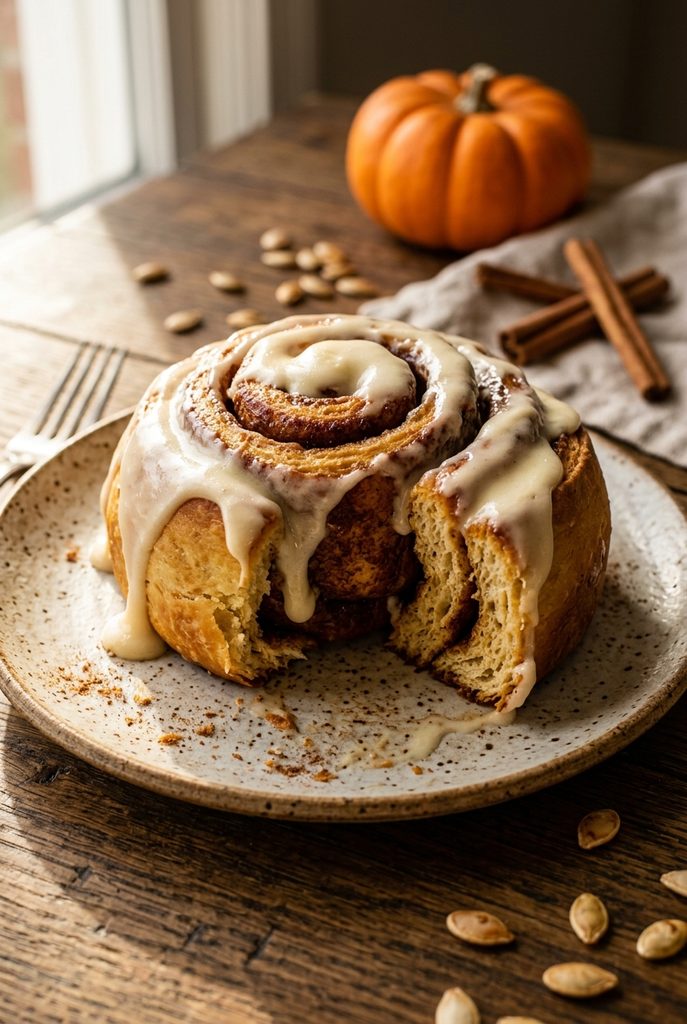
The Biggest Mistakes I Want You to Avoid
I’ve made most of these mistakes myself at some point, so here’s exactly what causes each one and how to fix it.
Why are my cinnamon rolls dense? Almost always too much flour, not enough rise time, or yeast that didn’t fully activate. Measure flour by spooning it into your measuring cup and leveling it off rather than scooping directly from the bag, which packs in extra flour.
Why is my dough too sticky? Because of the pumpkin puree, this dough is naturally softer than a typical dough. A little tackiness is normal. If it’s genuinely too sticky to handle even after a full knead, add flour one tablespoon at a time rather than dumping in a large amount at once.
Why didn’t my dough rise? Usually dead yeast, either because it was expired or because the liquid was too hot when you added it. A cold kitchen can also slow things down significantly — try placing the bowl in a turned-off oven with just the oven light on for gentle warmth.
Why did my cinnamon rolls become dry? Overbaking is the most common cause. Start checking a few minutes before the low end of the bake time and pull them as soon as the centers look set, not deeply browned.
Why did the filling leak out? This usually happens when the filling is spread too close to the edges on all sides, or when the rolls aren’t rolled tightly enough. Leave that bare strip along one edge and roll firmly but without stretching the dough.
Why are the centers underbaked? Rolls cut too thick, or a baking dish that’s too crowded so the heat can’t reach the middle rolls evenly. Give them a little breathing room in the pan and check doneness with a thermometer if you’re unsure.
Why did the rolls spread instead of rising? This typically means the dough was under-proofed before shaping, or too warm and soft when it went into the oven, causing it to spread outward before the structure could set.
Why did my frosting become runny? Adding milk too quickly, or frosting rolls that are too hot. Add liquid a small amount at a time and let the frosting rest a few minutes before deciding if it needs more.
Why aren’t my rolls fluffy? This usually comes back to under-kneading, under-proofing, or too much flour. Fluffiness depends on all three steps working together, not just one.
How to Know When the Dough Is Ready
I mentioned this earlier, but it’s worth its own section because it’s the part people worry about most. Properly developed dough should be:
- Smooth on the surface, not shaggy or rough
- Elastic enough to stretch a little without tearing right away
- Slightly tacky to the touch, but not sticking heavily to your hands
- Springy when you press it gently with a floured finger
Flour absorption changes depending on humidity, the exact brand of flour, and even how you measure it. That’s why I always tell people to treat the flour amount in the recipe as a starting range, not a fixed rule. Add it gradually and stop as soon as the dough reaches the texture described above, even if it’s a little before or after the amount listed.
Overnight Pumpkin Spice Cinnamon Rolls
This is genuinely my favorite way to make these, especially for Thanksgiving morning or Christmas breakfast, when the last thing I want to do is deal with dough at 6 a.m.
Here’s how I do it:
- Prepare the dough and let it complete its first rise as normal.
- Roll, fill, and cut the rolls, then arrange them in your greased baking dish.
- Instead of doing a second rise at room temperature, cover the dish tightly with plastic wrap and refrigerate overnight, for up to about 16 hours.
- The cold slows the yeast way down, so the rolls rise very slowly in the fridge instead of on the counter.
- The next morning, take the dish out and let it sit at room temperature for about 30–45 minutes while your oven preheats, so the rolls can finish puffing up before baking.
- Bake as directed, adding a few extra minutes if the rolls are still slightly cold in the center.
This method means all the messy part happens the night before, and all you’re doing in the morning is baking and frosting. It’s the version I make almost every year for Thanksgiving.
Can I Freeze Pumpkin Spice Cinnamon Rolls?
Yes, and there are two ways to do it depending on how far ahead you’re planning.
Freezing unbaked rolls: After cutting and arranging the rolls in your baking dish, skip the second rise and freeze them, tightly wrapped, before that rise happens. When you’re ready to bake, move them to the refrigerator overnight to thaw, then let them come to room temperature and finish rising before baking as usual.
Freezing baked rolls: Let the baked, unfrosted rolls cool completely, then wrap them tightly in plastic wrap and foil, or store in a freezer-safe container, for up to about two months. Frost fresh cream cheese frosting after reheating rather than freezing the frosting on top.
Thawing and reheating: Thaw overnight in the refrigerator, then warm in a 300°F oven for about 10–15 minutes, covered loosely with foil, until heated through.
How I Serve These
My favorite part of making a batch of these is honestly just the moment I set them on the table while they’re still a little warm. A few of the ways I usually serve them:
- With a big mug of coffee or a pumpkin spice latte, obviously
- As part of a Thanksgiving morning spread alongside eggs and fruit
- For Christmas morning with the family before opening gifts
- As a simple weekend breakfast with nothing else needed
- Occasionally as a fall dessert, slightly warmed with extra frosting on top
They’re rich enough to feel special but simple enough that I don’t need to serve much alongside them.
Easy Variations
Once you’re comfortable with the base recipe, there’s a lot of room to make it your own:
- Maple pumpkin spice cinnamon rolls — swap some of the granulated sugar in the frosting for maple syrup
- Pecan pumpkin cinnamon rolls — add chopped pecans directly into the filling
- Extra-spiced pumpkin rolls — increase the pumpkin pie spice slightly in both the dough and filling
- Pumpkin chocolate chip cinnamon rolls — sprinkle mini chocolate chips over the filling before rolling
- Dairy-free variation — use plant-based milk, butter, and cream cheese alternatives
- Nut-free variation — simply leave out the pecans, the recipe works perfectly without them
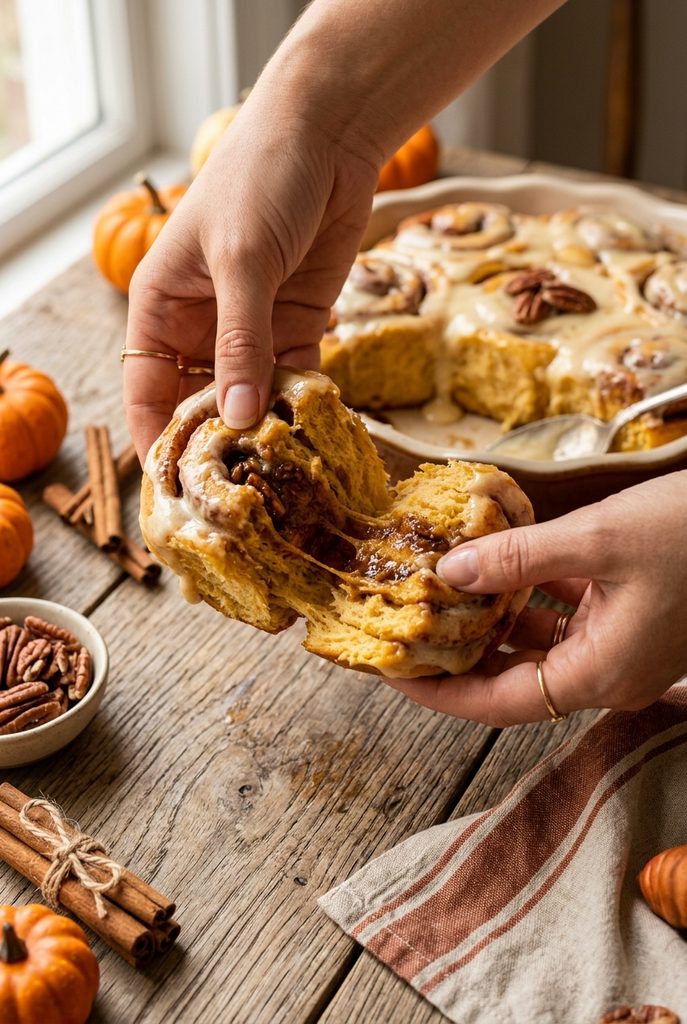
Meal Planning Makes Homemade Baking So Much Easier
Making something like these pumpkin spice cinnamon rolls from scratch isn’t complicated once you understand the process, but I’ll be honest about something else: the hardest part of cooking at home for me has never been the actual cooking. It’s the planning.
I used to find myself standing in front of the fridge most weeknights with no real idea what to make, which usually meant either an extra grocery run for something I forgot, or giving up and ordering takeout. And when I didn’t plan ahead, I’d buy ingredients for one recipe idea and never actually use them, which meant wasted food and wasted money.
Disclosure: This post may contain affiliate links. If you purchase through my link, I may earn a commission at no additional cost to you.
This is actually part of why I started using Meal Planning Made Easy. It’s a simple resource designed to help take the guesswork out of figuring out what to cook, so you’re not standing in the kitchen every night trying to invent a plan from scratch. If you love baking recipes like these but the rest of your week’s meals feel a lot less organized, it’s worth a look.
How to Make the Rolling and Prep Easier With a Plan
The same logic applies to a recipe like this. Cinnamon rolls take a bit of lead time between the dough, the rise, and the bake, so knowing in advance which morning you’re making them, and what groceries you actually need on hand, makes the whole process smoother.
This is where having some kind of weekly plan really helps. I keep my baking days penciled into the same general routine I use for meal planning the rest of the week, so I’m not scrambling for pumpkin puree or cream cheese at the last minute. If figuring out your grocery list every week feels like its own chore, Meal Planning Made Easy is a resource built specifically to help make that part of home cooking feel less overwhelming.
Storage and Reheating
Room temperature: Store frosted rolls covered at room temperature for up to 2 days.
Refrigerator: For longer storage, refrigerate covered for up to 5 days. The cold will firm up the frosting and dough slightly, so plan to reheat before serving.
Freezer: As covered above, both baked and unbaked rolls freeze well for up to about two months.
Reheating in the microwave: Warm individual rolls for about 15–20 seconds. Don’t overdo it, or the frosting will melt completely and the dough can turn tough.
Reheating in the oven: Cover the rolls loosely with foil and warm at 300°F for about 10 minutes, which keeps them soft without drying them out.
Frequently Asked Questions
Can I make pumpkin spice cinnamon rolls the night before? Yes. Follow the overnight method above — shape the rolls, refrigerate overnight, then let them finish rising at room temperature before baking in the morning.
Can I use canned pumpkin puree? Yes, canned pumpkin puree is exactly what this recipe calls for. Just make sure the label says “pumpkin puree,” not “pumpkin pie filling.”
Can I use pumpkin pie filling instead? No. Pumpkin pie filling already contains added sugar and spices, which will throw off the dough’s balance. Stick with plain pumpkin puree.
Why is my dough sticky? Pumpkin puree adds extra moisture, so this dough is naturally a bit softer and tackier than a standard cinnamon roll dough. That’s normal. Add extra flour only a tablespoon at a time if it’s truly unmanageable.
Can I freeze these cinnamon rolls? Yes, both before and after baking. See the freezing section above for full instructions.
How do I keep cinnamon rolls soft after baking? Avoid overbaking, store them covered so they don’t dry out, and reheat gently rather than letting them sit out uncovered.
Can I make these without a stand mixer? Absolutely. I made these by hand for years before I owned a stand mixer. It just takes a bit more elbow grease during kneading.
Can I use instant yeast instead of active dry yeast? Yes. Instant yeast can be mixed directly into the dry ingredients without proofing it in liquid first, though proofing it anyway won’t hurt anything.
How do I know when cinnamon rolls are fully baked? The tops should be golden, the centers should no longer look doughy, and a thermometer inserted into the middle should read around 190°F.
Can I substitute the cream cheese frosting? Yes, a simple powdered sugar glaze works if you prefer something lighter, though you’ll lose some of the tangy richness cream cheese adds.
Can I add pecans to the filling? Yes, chopped pecans are a great optional addition for texture.
Can I make smaller cinnamon rolls? Yes, just cut the rolled dough into more, thinner pieces and reduce the bake time slightly, checking a few minutes early.
My Best Tips for Perfect Pumpkin Spice Cinnamon Rolls
- Don’t add flour past the point where the dough feels soft and slightly tacky
- Bring your egg to room temperature so it blends smoothly into the warm mixture
- Never let your liquid get too hot before adding yeast, or you risk killing it
- Give the dough real time to rise; a cold kitchen just needs more patience, not more yeast
- Roll the dough to an even thickness so the rolls bake at the same rate
- Leave a bare strip along one edge so the roll seals properly and doesn’t unravel
- Don’t overfill with cinnamon filling, or it will squeeze out during baking
- Cut the rolls with floss for the cleanest slices without squashing the dough
- Pull the rolls from the oven as soon as the centers look set, not deeply browned
- Frost while the rolls are warm, not hot, so the icing partially melts in instead of sliding off
- Plan your baking day ahead of time so you’re not missing an ingredient halfway through
Recipe Card
Pumpkin Spice Cinnamon Rolls
Soft, fluffy homemade cinnamon rolls made with real pumpkin puree and warm pumpkin pie spice, filled with a gooey cinnamon-brown sugar swirl and topped with thick cream cheese frosting.
Prep time: 30 minutes Rise time: 90 minutes (first rise) + 40 minutes (second rise) Bake time: 25 minutes Total time: About 3 hours Servings: 12 Yield: 12 rolls
Ingredients
For the dough:
- 3/4 cup warm milk (180 ml), about 105–110°F
- 2 ¼ tsp (1 packet) active dry yeast or instant yeast
- 1/3 cup granulated sugar (65 g), divided
- 3/4 cup pumpkin puree (180 g), not pumpkin pie filling
- 1/4 cup unsalted butter (55 g), melted and slightly cooled
- 1 large egg, room temperature
- 1 tsp salt
- 2 tsp pumpkin pie spice
- 4 to 4 ½ cups all-purpose flour (500–565 g), plus more as needed
For the filling:
- 1/2 cup unsalted butter, softened (115 g)
- 3/4 cup packed brown sugar (165 g)
- 2 tbsp ground cinnamon
- 1 tsp pumpkin pie spice
- 1/2 cup chopped pecans, optional (60 g)
For the cream cheese frosting:
- 8 oz cream cheese, softened (225 g)
- 1/4 cup unsalted butter, softened (55 g)
- 2 cups powdered sugar (240 g)
- 1 tsp vanilla extract
- 1–2 tbsp milk or cream, as needed
- Optional: 1 tbsp maple syrup or 1/4 tsp pumpkin pie spice
Instructions
- Warm the milk to about 105–110°F. Stir in the yeast and a pinch of the sugar. Let sit 5–10 minutes until foamy.
- In a large bowl, whisk together the pumpkin puree, melted butter, egg, remaining sugar, and pumpkin pie spice. Stir in the yeast mixture.
- Add the salt and flour gradually, starting with 4 cups, mixing until a soft, slightly tacky dough forms. Add more flour only a tablespoon at a time if needed.
- Knead for 7–9 minutes by hand or with a stand mixer until smooth, elastic, and slightly tacky.
- Place in a greased bowl, cover, and let rise in a warm spot for 60–90 minutes, until doubled.
- Mix the softened butter, brown sugar, cinnamon, and pumpkin pie spice for the filling.
- Roll the dough into a 16×12-inch rectangle. Spread the filling to the edges, leaving a half-inch bare strip along one long edge. Sprinkle with pecans if using.
- Roll tightly starting from the filled edge, ending at the bare strip, seam-side down.
- Cut into 12 even rolls using dental floss or a sharp knife.
- Arrange in a greased 9×13-inch baking dish. Cover and let rise 30–45 minutes, until puffy.
- Preheat oven to 350°F (175°C). Bake for 22–28 minutes, until golden and the centers are set (internal temp around 190°F).
- While the rolls bake, beat the cream cheese and butter until smooth. Add powdered sugar gradually, then vanilla, then milk a tablespoon at a time until spreadable.
- Let the rolls cool 10 minutes, then spread on the frosting while still warm.
Notes
- The dough should feel soft and slightly tacky, not dry. Resist the urge to add too much flour.
- For a lighter dough, use whole milk rather than a lower-fat alternative.
Storage
Store covered at room temperature for up to 2 days, or refrigerate for up to 5 days.
Make-Ahead Instructions
Prepare through step 9, cover tightly, and refrigerate overnight (up to 16 hours) instead of doing the second rise at room temperature. The next morning, let sit at room temperature for 30–45 minutes before baking.
Reheating Instructions
Microwave individual rolls for 15–20 seconds, or warm covered in a 300°F oven for about 10 minutes.
Optional Substitutions
- Dairy-free: use plant-based milk, butter, and cream cheese
- Nut-free: omit the pecans
- Frosting alternative: a simple powdered sugar glaze