There’s a specific kind of guilt that comes from opening the fridge, seeing a head of cabbage sitting there, and closing the door again. I know it well. I bought that cabbage with good intentions — maybe for slaw, maybe for soup — and then three days went by and it was still just sitting there, taking up space, quietly judging me.
That’s actually how this recipe was born. I wasn’t inspired by a cookbook or a fancy restaurant menu. I was standing in my kitchen, tired after a long day, staring at a cabbage I didn’t feel like turning into another stir-fry or side dish. I wanted something warm and creamy instead — something that felt like dinner, not like “eating my vegetables.” So I decided to see what would happen if I treated cabbage the way I’d treat pasta in an Alfredo sauce.
The result was Creamy Cabbage Alfredo, and it’s become one of those meals I make when I want something comforting without much effort or expense. If you’ve ever wondered whether a humble, inexpensive vegetable like cabbage could actually be the star of a rich, creamy dinner, I promise it can. Let me walk you through how I make it, what I’ve learned along the way, and how this simple creamy cabbage recipe might solve a few dinner-time headaches for you too.
Why I Started Making Creamy Cabbage Alfredo
I’ll be honest — cabbage was never a vegetable I got excited about. It felt like something you cooked because it was cheap and lasted a long time in the fridge, not because you were craving it. But that’s actually part of why I kept buying it. It’s inexpensive, it keeps well, and one head goes a long way.
The problem was that I kept letting it go to waste because I didn’t have a go-to way to cook it that felt like an actual meal. I’d steam it, get bored halfway through eating it, and never make it again for weeks.
One evening, I had heavy cream and Parmesan left over from another recipe, and instead of making pasta, I thought about slicing the cabbage thin and cooking it down in that same creamy, garlicky sauce. I wasn’t sure it would work. Cabbage can get watery, and I worried the sauce would turn thin and sad instead of rich and velvety.
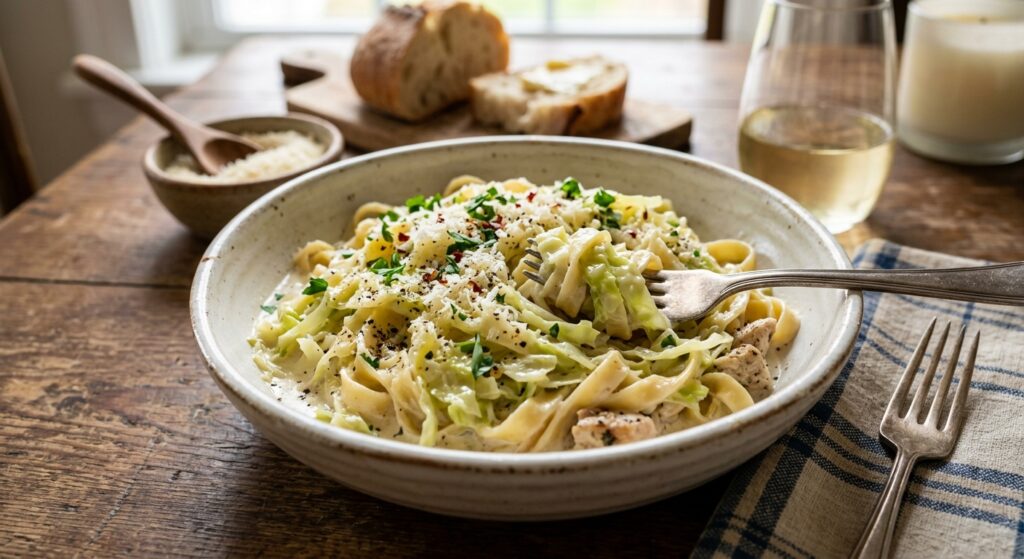
It didn’t. What I got instead was a dish where the cabbage softened into these silky, slightly caramelized ribbons that soaked up the sauce almost like noodles do. That surprised me. I expected the cabbage to just be “there,” but it actually became the texture of the dish, not just a vegetable floating in it.
Why This Recipe Works
Cabbage Alfredo works for a few practical reasons, and I think that’s worth explaining instead of just telling you to trust me.
First, cabbage has a mild flavor that takes on whatever it’s cooked in. When you cook it slowly in butter and garlic, it doesn’t fight the creamy sauce — it absorbs it.
Second, cabbage releases a little natural moisture as it cooks, but not nearly as much as, say, zucchini or mushrooms. That means it adds body to the sauce instead of watering it down too much, as long as you manage the heat and timing correctly (more on that below).
Third, and maybe most importantly for a weeknight dinner, cabbage cooks fast. A thinly sliced head can go from raw to tender in about 10 minutes. That’s faster than boiling a pot of pasta, which is part of why this has become a genuine easy weeknight dinner in my house rather than a “special occasion” recipe.
This is also a solid creamy cabbage pasta alternative if you’re trying to eat a few more vegetables without turning dinner into a production, or if you simply want an easy vegetable dinner that doesn’t taste like a compromise.
What You’ll Need
Here’s the short version of what goes into this dish. I’ll explain the reasoning behind a few key ingredients in the next section.
- Green cabbage
- Butter
- Garlic
- Heavy cream (or half-and-half)
- Parmesan cheese
- Chicken or vegetable broth
- Salt, black pepper, and a pinch of nutmeg
- Optional: red pepper flakes, fresh parsley
You likely already have most of this on hand, which is part of the appeal. This isn’t a recipe that sends you out for specialty ingredients.
Ingredient Notes and Smart Substitutions
Cabbage: I use green cabbage because it’s affordable, holds its shape reasonably well, and has a flavor that mellows nicely when cooked. Savoy cabbage also works and has a slightly more tender leaf if you want to try it.
Butter: Butter builds the base flavor of the sauce and helps the garlic bloom without burning. If you’re out, olive oil works, though you’ll lose a little richness.
Garlic: Fresh garlic makes a real difference here since the sauce is simple enough that you’ll taste it clearly. In a pinch, jarred minced garlic works fine.
Heavy cream: This is what gives the sauce its Alfredo-style richness. Half-and-half is a lighter substitution, though the sauce will be thinner and may need a bit more simmering time to thicken.
Parmesan cheese: Freshly grated Parmesan melts more smoothly than the pre-shredded kind, which is often coated in anti-caking starch that can make sauces grainy. If pre-shredded is what you have, it still works — just add it gradually over low heat.
Broth: A splash of broth loosens the sauce slightly and adds savoriness without watering down the cream. Vegetable broth keeps the dish vegetarian.
Nutmeg: This is optional but classic in cream sauces. Just a pinch rounds out the richness without tasting like nutmeg specifically.
How to Make Creamy Cabbage Alfredo
Step 1: Slice the cabbage thin. Cut the cabbage in half, remove the core, and slice it into thin ribbons — about a quarter-inch wide. Thin slices cook evenly and get that soft, noodle-like texture. If the pieces are too thick, the outside will be tender while the inside stays crunchy.
Step 2: Build the base. Melt butter in a large skillet over medium heat. Add minced garlic and cook just until it becomes fragrant, about 30 seconds. You’ll know it’s ready when you can smell it clearly but before it starts to turn golden — garlic burns fast and turns bitter.
Step 3: Add the cabbage. Add the sliced cabbage to the skillet in batches if needed, tossing it in the butter and garlic. It will look like a lot at first, but it shrinks down significantly as it cooks.
Step 4: Cook until just tender. Let the cabbage cook for about 6–8 minutes, stirring occasionally. You’re looking for it to turn slightly translucent at the edges and soften enough to bend easily, but it shouldn’t be mushy. Think “tender with a little bite,” not “falling apart.”
Step 5: Add the broth. Pour in a splash of broth and let it simmer for a minute or two. This helps loosen any browned bits from the pan and adds flavor to the base of the sauce.
Step 6: Pour in the cream. Reduce the heat to low and add the heavy cream. Let it come to a gentle simmer — not a rolling boil, which can cause the sauce to separate.
Step 7: Add the cheese gradually. Stir in the Parmesan a handful at a time, letting each addition melt before adding more. The sauce should start to thicken and turn glossy rather than staying thin and liquid.
Step 8: Season and finish. Add salt, pepper, and a pinch of nutmeg if using. Taste and adjust. If the sauce feels too thick, a small splash of broth or reserved pasta water loosens it back up.
My Tips for Getting the Sauce Creamy Instead of Watery
This is the part I get asked about most, so let me be specific.
- Don’t skip the “cook down” step. If you add the cream too early, before the cabbage has had a chance to release some of its moisture and soften, you’ll end up diluting the sauce. Let the cabbage cook mostly through first.
- Keep the heat low once the cream goes in. High heat can cause cream sauces to break or separate, which looks curdled instead of silky.
- Add cheese in stages. Dumping all the Parmesan in at once tends to clump instead of melting smoothly.
- Give it time to thicken. The sauce continues to thicken for a minute or two after the cheese is fully melted. If you judge it too early, you might add unnecessary extra cream or cheese.
- Salt at the end. Parmesan is salty on its own, so I always taste before adding more salt.
I learned the “low heat” lesson the hard way the first time I made this — I had the burner too high, trying to rush dinner, and ended up with a sauce that looked slightly grainy instead of smooth. Turning the heat down and stirring patiently fixed it the second time around.
Common Mistakes to Avoid
- Slicing the cabbage too thick. This leads to uneven cooking and a less noodle-like texture.
- Rushing the garlic. Burnt garlic turns bitter and affects the whole dish.
- Boiling the cream sauce. This is the most common cause of a broken or grainy sauce.
- Using pre-shredded cheese straight from a bag without adjusting technique. It can still work, but add it slowly over low heat.
- Not tasting before serving. Cream sauces mellow the seasoning, so a dish that tastes slightly under-salted before serving is usually fine — but it’s still worth checking.
How I Make This Recipe Work on Busy Nights
On a slower evening, I don’t mind taking my time with each step. But on a busy weeknight, here’s what I actually do:
I slice the cabbage the night before, or even in the morning, and store it in the fridge so dinner is just a matter of cooking, not prepping. If you’re making this on a busy weeknight, that’s the one step I’d recommend doing ahead if you can.
I also keep a shredded rotisserie chicken on hand some weeks, which turns this from a side dish into a full meal in almost no extra time.
This is honestly where meal planning makes the biggest difference. On weeks when I’ve thought ahead about what I’m making for dinner, a recipe like this comes together in under 30 minutes. On weeks when I haven’t planned anything, I’m far more likely to order takeout instead of cooking what’s already in my fridge — which is exactly the “what’s for dinner” problem that leads to wasted groceries and unnecessary spending.
Easy Ways to Change the Recipe
- Add protein: Shredded chicken, crispy bacon, or white beans all work well stirred in at the end.
- Make it spicier: A pinch of red pepper flakes adds warmth without overwhelming the dish.
- Add another vegetable: Thinly sliced onion or mushrooms can cook down alongside the cabbage.
- Make it vegetarian: Use vegetable broth instead of chicken broth, and skip any meat add-ins.
- Lighten it slightly: Half-and-half instead of heavy cream creates a thinner but still creamy sauce.
What to Serve With Creamy Cabbage Alfredo
Because this dish is rich, I like pairing it with something simple on the side:
- A piece of crusty bread for soaking up extra sauce
- A light green salad with a vinegar-based dressing to balance the richness
- Roasted or steamed vegetables, like green beans or carrots
- If you want more substance, it also works well spooned over a bed of rice or alongside grilled chicken
How to Store and Reheat Leftovers
Storage: Let leftovers cool, then store them in an airtight container in the refrigerator for up to 3–4 days.
Reheating: Reheat gently on the stovetop over low heat, stirring occasionally. Cream sauces can separate if reheated too quickly, so low and slow is worth the extra couple of minutes. Adding a small splash of broth or milk while reheating helps bring the sauce back to a smoother consistency.
I don’t recommend freezing this one — cream sauces tend to separate after freezing and thawing, and the texture isn’t quite the same once reheated.
How I Use Meal Planning to Make Recipes Like This Easier
I’ll admit that recipes like this one only become a regular part of my routine when I’m actually planning my meals ahead of time. Without a plan, cabbage sits in my fridge until it’s no longer good, and I end up buying the same handful of “safe” ingredients out of habit instead of using what I already have.
When I sit down once a week and map out a few dinners, including something like Creamy Cabbage Alfredo, I buy exactly what I need, and I’m far less likely to let vegetables go to waste. It also means I’m not standing in front of the fridge every evening trying to improvise something out of whatever’s left.
My Recommendation: Meal Planning Made Easy
If you find yourself buying groceries with good intentions and then wondering what to cook three days later, this is exactly where Meal Planning Made Easy can help.
It’s an ebook built around the kind of everyday meal-planning problems most of us deal with — creating a realistic weekly menu, shopping smarter so you’re not overbuying, cutting down on food waste, and putting together simple meal-prep routines that don’t take over your weekend. It’s the same kind of thinking that made me start planning meals around ingredients like cabbage instead of letting them go unused.
As of now, the ebook is offered at $17.99 and includes a second ebook at no extra cost, though offers like this can change, so it’s worth checking the current details on the page.
If dinner planning is something you’re constantly putting off or figuring out at the last minute, it might be worth a look: Meal Planning Made Easy
Disclosure: This post contains an affiliate link, which means I may earn a commission if you purchase through my link, at no additional cost to you.
Frequently Asked Questions
Can I make Creamy Cabbage Alfredo without pasta? Yes — that’s actually the whole idea behind this recipe. The cabbage itself takes on a soft, ribbon-like texture that works as a stand-in for pasta, so you don’t need to add noodles at all. If you’d like a heartier meal, you can serve it over pasta or rice, but it’s designed to be satisfying on its own.
How do I stop cabbage from becoming watery? Slice it thin, cook it in butter until it’s just tender before adding the cream, and keep the heat low once the sauce goes in. Rushing the process or adding the cream too early is usually what leads to a watery result.
Can I use pre-shredded cabbage? Yes, pre-shredded coleslaw mix works as a shortcut. Just check that it’s plain shredded cabbage without added dressing, and be aware the pieces may be a little thicker or thinner than a hand-sliced batch, which can slightly change the cook time.
Can I make this recipe ahead of time? You can slice the cabbage and prep your ingredients a day ahead, but I’d recommend cooking the sauce fresh. Cream sauces are best made close to serving time, since they can thicken or separate when stored and reheated.
What cheese works best? Freshly grated Parmesan melts the smoothest and gives the best flavor. Pre-shredded Parmesan works too, just add it gradually over low heat to avoid clumping. Asiago or a Parmesan-Romano blend can also work if you want a slightly sharper flavor.
How do I reheat creamy cabbage Alfredo? Reheat it slowly on the stovetop over low heat, stirring often. A small splash of broth or milk helps loosen the sauce back to a creamy consistency. Microwaving works in a pinch, but do it in short bursts and stir between each one.
What can I serve with it? Crusty bread, a simple green salad, or roasted vegetables all pair well. If you want a more filling meal, serve it alongside grilled chicken or over rice.
Can I add protein? Yes. Shredded rotisserie chicken, cooked bacon, or white beans all work nicely stirred in near the end of cooking.
Can I make it vegetarian? Yes — simply use vegetable broth instead of chicken broth, and leave out any meat-based add-ins. The base recipe itself is already vegetarian.
Final Thoughts
I didn’t expect a head of cabbage sitting in my fridge to turn into one of my regular dinners, but that’s exactly what happened. Creamy Cabbage Alfredo has become one of those recipes I reach for when I want something warm and comforting without spending a lot of time or money getting there.
If you’ve been overlooking cabbage the way I used to, I’d encourage you to give this one a try. And if the bigger issue is less about this one recipe and more about the ongoing “what’s for dinner” question, it might be worth taking a closer look at how a little meal planning could make weeknights like this easier — that’s really where a resource like Meal Planning Made Easy earns its place in the process.
Either way, I hope this creamy cabbage recipe finds a place in your weekly rotation the way it has in mine.
Recipe Card
Creamy Cabbage Alfredo
A cozy, budget-friendly dinner that turns thinly sliced cabbage into a creamy, Alfredo-style main dish. No pasta required — the cabbage does all the work.
Prep Time: 10 minutes Cook Time: 20 minutes Total Time: 30 minutes Servings: 4 Estimated Cost: Approximately $8–10 total (about $2–2.50 per serving) Calories: Approximately 320–360 per serving (estimate; will vary based on exact ingredients used)
Equipment:
- Large skillet or sauté pan with a lid
- Sharp knife and cutting board
- Wooden spoon or spatula
- Box grater (if using block Parmesan)
Ingredients:
- 1 medium head green cabbage (about 2 lbs), thinly sliced
- 3 tablespoons butter
- 4 cloves garlic, minced
- 1/4 cup chicken or vegetable broth
- 1 cup heavy cream
- 3/4 cup freshly grated Parmesan cheese
- 1/2 teaspoon salt, plus more to taste
- 1/4 teaspoon black pepper
- Pinch of nutmeg (optional)
- Optional: red pepper flakes, chopped parsley, for serving
Instructions:
- Slice the cabbage into thin, quarter-inch ribbons after removing the core.
- Melt the butter in a large skillet over medium heat. Add the garlic and cook until fragrant, about 30 seconds.
- Add the cabbage to the skillet, tossing to coat in the butter. Cook for 6–8 minutes, stirring occasionally, until the cabbage is tender but not mushy.
- Pour in the broth and let it simmer for 1–2 minutes, scraping up any browned bits.
- Reduce heat to low and stir in the heavy cream. Let it come to a gentle simmer.
- Add the Parmesan a handful at a time, stirring until melted before adding more, until the sauce is smooth and thickened.
- Season with salt, pepper, and nutmeg if using. Taste and adjust.
- Serve warm, topped with red pepper flakes or parsley if desired.
Recipe Notes:
- Slice the cabbage evenly for the best texture and most consistent cooking.
- Keep the heat low once the cream is added to prevent the sauce from separating.
- Add cheese gradually for the smoothest sauce.
Storage: Store in an airtight container in the refrigerator for up to 3–4 days. Not recommended for freezing, as the cream sauce may separate.
Reheating: Reheat gently over low heat on the stovetop, stirring often, adding a small splash of broth or milk to loosen the sauce as needed.
Variations:
- Add shredded chicken, bacon, or white beans for extra protein.
- Use half-and-half for a lighter sauce.
- Add red pepper flakes for a little heat.
- Serve over rice or pasta for a heartier meal.