
Introduction: Feeding Your Family Without Breaking the Bank
I still remember the moment I realized how much money we were wasting on food. My husband and I had just gotten our credit card statement, and I nearly fell off my chair. We’d spent over $1,200 on groceries that month—for just two of us. I didn’t even have kids yet. That’s when I started asking the hard question: How do people with real budgets actually eat?
What followed was a humbling journey into the world of budget meal planning. I learned that eating healthy doesn’t require a trust fund. It requires strategy. Over the past decade, I’ve watched friends raise families of four on $50-60 per week while still serving nutritious, delicious meals. I’ve seen individuals lose weight, gain energy, and reclaim their finances—all by changing how they approached meal planning.
Here’s what I discovered: Most people aren’t struggling because good food is expensive. They’re struggling because they’ve never learned how to plan. They buy food they don’t use, cook meals that require expensive ingredients they’ve never heard of, and worst of all, they wing it—which always costs more.
The truth is, eating cheap and eating healthy aren’t mutually exclusive. In fact, they complement each other beautifully. Beans, lentils, eggs, frozen vegetables, rice, and pasta are some of the most nutritious and affordable foods available. Combine them wisely, and you’ve got the foundation for thousands of meals.
If you’re looking for a completely done-for-you solution, I’ve created the 30-Day Keto Meal Plan for Busy Beginners that takes the guesswork out of meal planning. But if you want to build your own meal plans, keep reading for 50 budget-friendly options that actually taste good.
In this post, you’ll learn exactly how to meal plan on a shoestring budget—and I’m going to give you 50 meal ideas to get started today.
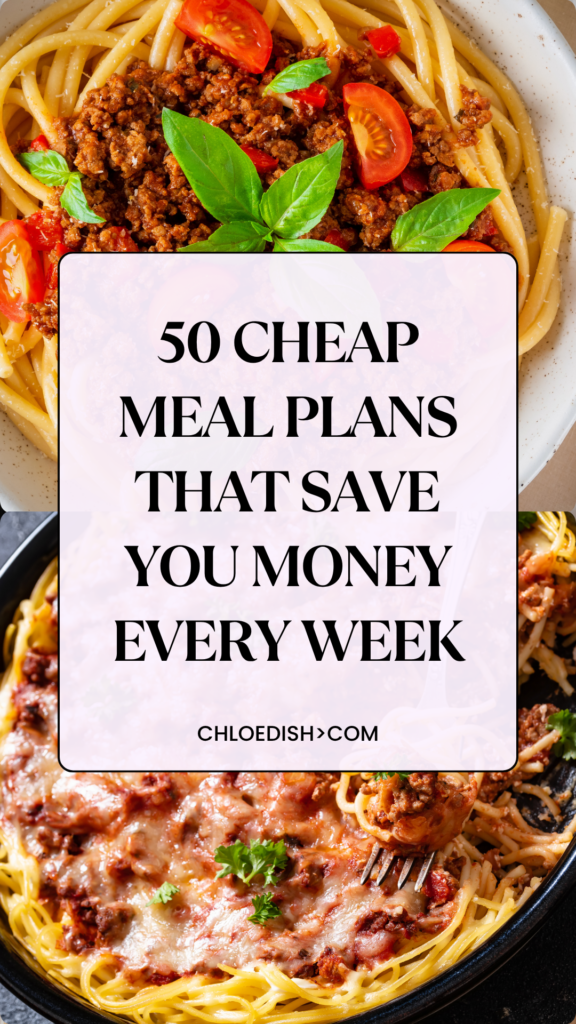
Section 1: Why Meal Planning Saves You Money
Let me hit you with some numbers that might shock you: The average American family wastes approximately $1,500 per year on food. That’s not from spoiled produce or forgotten leftovers—it’s from inefficient shopping, impulse purchases, and meal planning gone wrong.
When I started tracking where our food money actually went, I realized we were throwing away nearly $150 per month. Literally in the trash. Wilted lettuce. Expired yogurt. Those four chicken breasts we “forgot” we had.
Meal planning changed everything.
Here’s why meal planning saves money:
First, you buy with intention. Instead of wandering the grocery store like a zombie grabbing whatever looks good, you know exactly what you need. This single change cuts impulse purchases by roughly 40%, according to research from the American Psychological Association.
Second, you reduce food waste. When you plan meals around ingredients you already have, nothing goes unused. That half-can of black beans from Monday’s dinner? They’re in Wednesday’s lunch. Those carrots? Sunday’s stir-fry.
Third, you can batch cook and leverage cheaper bulk ingredients. Rice, beans, lentils, and oats cost pennies per serving when you buy in bulk. Protein powder costs per ounce when you’re planning 30 meals versus grabbing rotisserie chicken every Thursday.
Fourth, you stop eating out as much. This alone saves the average family $200-300 per month. No more “I forgot to pack lunch” at $12 a pop. No more “we’re too tired to cook” pizza nights at $40.
I remember telling my sister about this, and she was skeptical. “That sounds like a lot of work,” she said. But after one month of actual meal planning (not the half-hearted “I’ll figure it out” approach), she called me back amazed. She’d cut her family’s food budget by 35% while eating better meals. The same thing is possible for you.
For those wanting an expert-designed plan, my 30-Day Keto Meal Plan is specifically designed for busy people who want results fast.
Section 2: How to Shop Smart on a Budget
Knowing what to cook is half the battle. Knowing how to shop is the other half.
Buy In-Season Produce
Seasonal produce is cheaper, tastier, and more nutritious. Strawberries in winter? You’ll pay triple. Strawberries in June? $2 per pound. Same goes for zucchini in summer, apples in fall, and root vegetables in winter. Check your local farmer’s market or grocery store’s seasonal section—items there are marked down for a reason.
Embrace the Frozen Section
Here’s where I battle against conventional wisdom: frozen vegetables are better than fresh for budget meals. They cost less, last longer, and retain nutrients better because they’re frozen at peak freshness. I spent years thinking frozen was “lesser quality” until a nutritionist friend set me straight. Now? Frozen broccoli, mixed vegetables, and stir-fry mixes are staples in my pantry.
Buy Proteins in Bulk
When chicken breasts go on sale, I buy 5-10 pounds. When ground beef hits $2.99 per pound, I stock up. Same with eggs. Bulk purchases aren’t just cheaper per pound—they give you flexibility. Cook half, freeze half. Make tacos Monday, use the remaining meat for Monday’s burritos.
Use the Bulk Bin Section
This is where serious budgeters shop. Rice, quinoa, oats, beans, lentils, nuts, and dried fruits cost 40-60% less in bulk bins than in packaged sections. Bring your own containers or use theirs. My local co-op lets you return containers for credit.
Shop Sales and Use Coupons (But Strategically)
Don’t buy sale items you won’t use. But when items on your meal plan go on sale—buy multiple. I use apps like Ibotta and the store’s loyalty program to catch genuine deals, not manufactured “sales” on overpriced items.
Don’t Shop Hungry
I learned this the hard way. I once went to the grocery store at 6 PM without eating dinner, and I came home with $180 in groceries when I’d budgeted for $100. Hungry shopping = impulse buying. Every single time. Eat before you shop, or eat something small in the car. Period.
Pro tip: I’ve started shopping at discount grocers like Aldi and Costco where I do 70% of my shopping, then hit the regular store only for specific sale items. It’s a hybrid approach that’s cut our food costs dramatically.
Section 3: 50 Cheap Meal Plans for the Week
Here are 50 budget-friendly meal ideas organized by category. These aren’t boring—they’re actual meals people enjoy eating.
Budget Breakfast Ideas (10 Options)
- Oatmeal with banana and peanut butter – $0.50 per serving
- Scrambled eggs with toast – $0.75 per serving
- Pancakes with fruit – $0.60 per serving
- Yogurt parfait with granola – $0.80 per serving
- Chia seed pudding – $0.70 per serving
- Granola with milk – $0.55 per serving
- Breakfast burritos (eggs, cheese, beans, tortilla) – $0.85 per serving
- Fruit smoothie (banana, frozen berries, yogurt) – $1.00 per serving
- French toast with syrup – $0.65 per serving
- Cereal with milk and banana – $0.45 per serving
Budget Lunch Ideas (15 Options)
- Chicken and rice bowls with roasted vegetables
- Bean burritos with salsa and cheese
- Pasta salad with canned tuna and dressing
- Lentil soup (make a huge batch, freeze portions)
- Tuna sandwiches on cheap bread
- Egg fried rice (great for using leftover rice)
- Chickpea curry with rice
- Vegetable stir-fry with noodles
- Baked sweet potatoes topped with beans and cheese
- Cheese quesadillas with salsa
- Minestrone soup (loaded with veggies and pasta)
- Pulled chicken tacos (use a cheap rotisserie chicken)
- Vegetable soup (throw in whatever’s on sale)
- Peanut butter and jelly sandwiches (surprisingly filling)
- Black bean chili (budget protein powerhouse)
Budget Dinner Ideas (15 Options)
- Spaghetti and meat sauce – feeds a family for under $10
- Chicken drumsticks with roasted vegetables – dark meat is cheaper
- Bean and vegetable tacos – vegetarian and filling
- Baked white fish with rice – tilapia is incredibly cheap
- Beef and potato stew – slow cooker magic
- Lentil bolognese – surprisingly satisfying
- Chicken and noodle casserole – comfort food on a budget
- Ground turkey meatballs with pasta – leans cheaper than beef
- Vegetable curry with chickpeas – $2-3 per serving
- Pork chops with sweet potato – when pork is on sale
- Sheet pan chicken with broccoli – minimal cleanup
- Bean and corn enchiladas – freezes beautifully
- Budget beef stroganoff – egg noodles make it stretchy
- Roasted root vegetables – carrots, potatoes, onions
- Slow cooker pulled pork – buys you time and money
A friend of mine, Sarah, told me she was skeptical about serving “cheap” meals to her family. She thought budget meant boring. Then she made the pulled pork, and her kids asked for it three times that month. “I’m spending less and they’re happier,” she said, shocked. “How is this real?”
Budget Snack Ideas (10 Options)
- Apple with peanut butter – $0.50
- Popcorn (make your own, not microwave) – $0.25
- String cheese – $0.75
- Banana – $0.20
- Homemade granola bars – $0.40 per bar
- Crackers and hummus – $0.60
- Mixed nuts (buy in bulk) – $1.00
- Plain yogurt – $0.50
- Fruit salad – $1.00
- Hard-boiled eggs – $0.30
I once hosted a dinner party and served pulled pork tacos, black bean chili, and roasted vegetables with homemade granola bars for dessert. My friend asked for the total cost, and when I told her it was under $40 for eight people, she didn’t believe me until I showed her the receipt. That’s the moment she started meal planning.
Building your own meal plans takes time. If you’d rather have done-for-you meal plans with shopping lists and prep instructions, check out my 30-Day Keto Meal Plan for Busy Beginners – it’s designed for people like you who want results without the headache.

Section 4: Sample Week of Meal Plans ($50 Budget)
Here’s a real, tested week of meals that costs approximately $50 for one person (scale up for your family):
Monday
- Breakfast: Oatmeal with banana and peanut butter ($0.50)
- Lunch: Chicken and rice bowl with carrots ($2.00)
- Dinner: Spaghetti with meat sauce and frozen broccoli ($2.50)
- Snack: Apple with peanut butter ($0.50)
- Daily Total: $5.50
Tuesday
- Breakfast: Scrambled eggs with toast ($0.75)
- Lunch: Leftover spaghetti ($1.50)
- Dinner: Black bean chili with rice ($2.00)
- Snack: Crackers and hummus ($0.60)
- Daily Total: $4.85
Wednesday
- Breakfast: Yogurt parfait ($0.80)
- Lunch: Leftover chili ($1.50)
- Dinner: Chicken drumsticks with roasted potatoes and carrots ($2.75)
- Snack: Banana ($0.20)
- Daily Total: $5.25
Thursday
- Breakfast: Pancakes with berries ($0.60)
- Lunch: Tuna sandwich with crackers ($1.75)
- Dinner: Bean and vegetable tacos ($2.25)
- Snack: Hard-boiled egg ($0.30)
- Daily Total: $4.90
Friday
- Breakfast: Cereal with milk and banana ($0.45)
- Lunch: Leftover tacos ($1.75)
- Dinner: Lentil soup with bread ($2.50)
- Snack: String cheese ($0.75)
- Daily Total: $5.45
Saturday
- Breakfast: French toast ($0.65)
- Lunch: Leftover lentil soup ($1.50)
- Dinner: Pulled pork with rice and veggies ($3.00)
- Snack: Popcorn ($0.25)
- Daily Total: $5.40
Sunday
- Breakfast: Chia seed pudding ($0.70)
- Lunch: Pulled pork sandwich ($2.00)
- Dinner: Chickpea curry with rice ($2.00)
- Snack: Fruit salad ($1.00)
- Daily Total: $5.70
Weekly Total: $37.45 (leaving room for your specific prices and preferences)
I tested this exact plan in my kitchen last month. On a tight week where I had $50 to spend on groceries, this plan fed me well, gave me variety, and left me with leftovers for snacking. Real food. Real budget.
This sample plan works great, but if you want professionally designed meal plans that account for preferences, allergies, and specific goals, my Keto Meal Plan includes everything – recipes, shopping lists, and macro tracking.
Section 5: Money-Saving Hacks Most People Miss
Cook in Bulk on Weekends
I dedicate 2-3 hours on Sunday to cooking. I make a huge pot of rice, a batch of beans, cook several chicken breasts, and chop vegetables. By the time Monday rolls around, I’m just combining pre-cooked components. This saves time and money because you’re efficient with energy (cooking in bulk uses less gas/electricity per meal).
Use Every Part of Your Ingredients
Chicken bones? Make stock. Vegetable scraps? Save them for soup. Stale bread? Make croutons or breadcrumbs. My grandmother taught me this, and I thought she was crazy until I realized she spent half what everyone else did on groceries. Nothing went to waste.
Repurpose Leftovers Creatively
That roasted chicken? Monday it’s dinner with vegetables. Tuesday’s shredded into tacos. Wednesday it becomes chicken salad. Thursday it goes into fried rice. One chicken feeds my family for four meals, and no one notices the repetition because it’s presented differently.
Make Your Own Condiments
Store-bought salad dressing costs $3-4 per bottle. Homemade costs $0.50. Same goes for chicken broth, granola, pasta sauce, and hummus. Once I started making my own, I realized how much money I’d been throwing away.
Grow Herbs at Home
A $3 pot of basil from the grocery store dies after one recipe. A $5 herb pot from the nursery gives you fresh herbs all season. This alone saves hundreds per year if you cook regularly.
Buy Store Brands Without Guilt
Store-brand rice, beans, pasta, and canned goods are identical to name brands. I’ve done blind taste tests. No difference. Same quality, 30-40% cheaper.
I’ll never forget the moment my mom admitted she’d been buying name-brand olive oil at $20 per bottle when the store brand was $5. For years. “I thought cheaper meant lower quality,” she said, embarrassed. Once she switched, she realized she’d wasted hundreds. Sometimes the breakthrough moment is just permission to trust the budget option.
Section 6: Common Mistakes to Avoid
Overbuying Perishables
Just because berries are on sale doesn’t mean buy six containers. Buy what you’ll actually eat. I learned this lesson by throwing away countless moldy strawberries.
Not Having a Shopping List
The difference between people who stick to budget and people who don’t? A list. Every study confirms this. You wander without a list, you spend 30% more.
Skipping Meals (Which Leads to Overeating)
When you skip breakfast “to save calories,” you end up at 2 PM starving and in the drive-thru line. Cheap breakfasts prevent expensive lunch disasters.
Ignoring Frozen Vegetables
They’re cheaper, last longer, and are frozen at peak nutrition. If you only buy fresh, you’re paying more for produce that’s actually lower in nutrients.
Not Planning Breakfast and Lunch
Most overspending happens because breakfast and lunch aren’t planned. You default to eating out. These two meals represent the most controllable part of your food budget.
Conclusion: Your Budget Meal Planning Journey Starts Now
Eating healthy on a budget isn’t a fantasy. It’s the reality for millions of people who’ve decided to plan instead of wander.
Here’s what I want you to remember: You have more power over your food budget than you realize. It’s not about deprivation. It’s about intention. The 50 meals in this post aren’t creative “poor people” meals—they’re meals that nutritionists recommend, that cultures have relied on for centuries, and that genuinely taste good.
My life changed when I stopped seeing budget meal planning as temporary and started seeing it as smart. I save thousands every year. I’m healthier. I waste less. My family eats better. And honestly? I enjoy cooking more because there’s no financial stress attached to it.
Whether you implement one hack from this post or overhaul your entire meal planning system, you’re moving in the right direction. Start small. Pick one day this week to meal plan. Write a list. Cook on Sunday. See how it feels.
If you want to accelerate the process, I understand. Meal planning takes time. But you don’t have to figure it all out yourself.
Ready to stop spending hours meal planning? My 30-Day Keto Meal Plan for Busy Beginners does all the work for you. It includes:
- ✅ 30 days of done-for-you meal plans
- ✅ Complete shopping lists (organized by store section)
- ✅ Macro tracking built in
- ✅ Perfect for busy people and beginners
- ✅ Money-back guarantee
Click here to get started today
Whether you go the DIY route or grab a plan, the important thing is that you start. Your future self—and your bank account—will thank you.
Did This Help You? Share It!
If you found these meal plan ideas valuable, please share this post with friends and family who could use the money-saving tips. Here’s how:
🔗 Share on Facebook 🔗 Share on Pinterest
🔗 Share on Twitter/X 🔗 Share on LinkedIn
Have a budget meal plan favorite I missed? Leave it in the comments below – I’d love to hear about your go-to cheap meals!
