
There’s a certain smell that hits you the second you walk into a bakery. Warm cinnamon. Melting butter. That soft, doughy sweetness that makes your stomach growl before you even see the pastry case. If you’ve been doing keto for a while, you probably remember that smell fondly — and maybe you’ve tried to recreate it at home, only to end up with something dry, crumbly, and honestly kind of sad.
I’ve been there. My first batch of keto cinnamon rolls came out of the oven looking perfect, but one bite told the real story. Dense. Chalky. Almost eggy in a weird way. And don’t get me started on the almond flour I wasted trying to “fix” the recipe on my second and third attempts. Almond flour isn’t cheap, and watching a $9 bag turn into a hockey puck is genuinely painful.
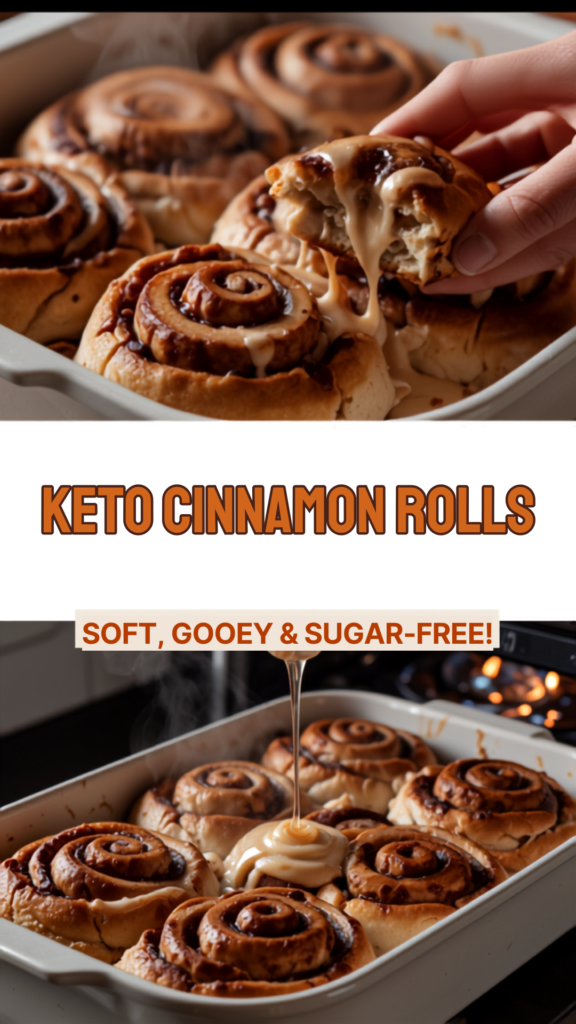
Here’s the good news: keto cinnamon rolls can be soft, fluffy, and gooey in the middle, with that classic swirl of cinnamon-sugar filling and a thick layer of cream cheese frosting melting on top. It just takes the right combination of ingredients and a few techniques most recipes never mention. That’s exactly what I’m walking you through today — a tested, foolproof method for keto cinnamon rolls that actually taste like the real thing.
By the end of this post, you’ll know exactly why keto cinnamon rolls go wrong, what to do differently, and how to bake a batch that disappears from the pan within minutes.
Why You’ll Love These Keto Cinnamon Rolls
- Soft and fluffy — not dense or eggy like most low-carb versions
- Gooey cinnamon filling that actually swirls through the dough
- Completely sugar-free, using keto-friendly sweeteners
- Low carb, with net carbs low enough to fit almost any keto macro plan
- Beginner friendly — no fancy equipment or bread-baking experience required
- Ready in under an hour, start to finish
- Family approved — even the non-keto eaters in my house ask for seconds
- Freezer friendly, so you can make a batch now and enjoy them for weeks
If you’ve been searching for the best keto cinnamon roll recipe that doesn’t taste like a science experiment, this is it.
Why Most Keto Cinnamon Rolls Fail
Before we get to the recipe, let’s talk about why so many keto baking attempts go sideways. Once you understand the why, the how makes a lot more sense.
Too much almond flour. Almond flour is heavier and more absorbent than wheat flour. Recipes that use it as a 1:1 wheat flour swap almost always end up dense and gritty.
The wrong sweetener. Regular erythritol can turn gritty or crystallize as it cools, which ruins the smooth texture you want in a filling or frosting. A monk fruit blend or allulose works much better for softness.
Dough that’s too dry. Keto dough dries out faster than wheat dough because there’s no gluten to trap moisture. A dough that looks “normal” on the counter often bakes up dry and crumbly.
Overbaking. Keto baked goods brown faster than traditional ones because almond flour caramelizes at a lower temperature. Many home bakers leave them in too long because the tops look pale, when really they’re already done.
Skipping the yeast flavor step. You don’t need yeast to rise (baking powder does that job here), but a small amount of inactive or proofed yeast adds that authentic “bread” flavor people miss most.
Wrong oven temperature. Too hot, and the outside burns before the inside sets. Too cool, and the rolls turn gummy in the middle.
Not letting the dough rest. Skipping rest time makes the dough harder to roll and causes it to spring back or tear.
The fix for almost every one of these problems comes down to using the right ratios and techniques — which is exactly what a solid, tested recipe (and a resource like The Ultimate Keto Baking Bundle) can save you from learning the hard way.
Ingredients You’ll Need
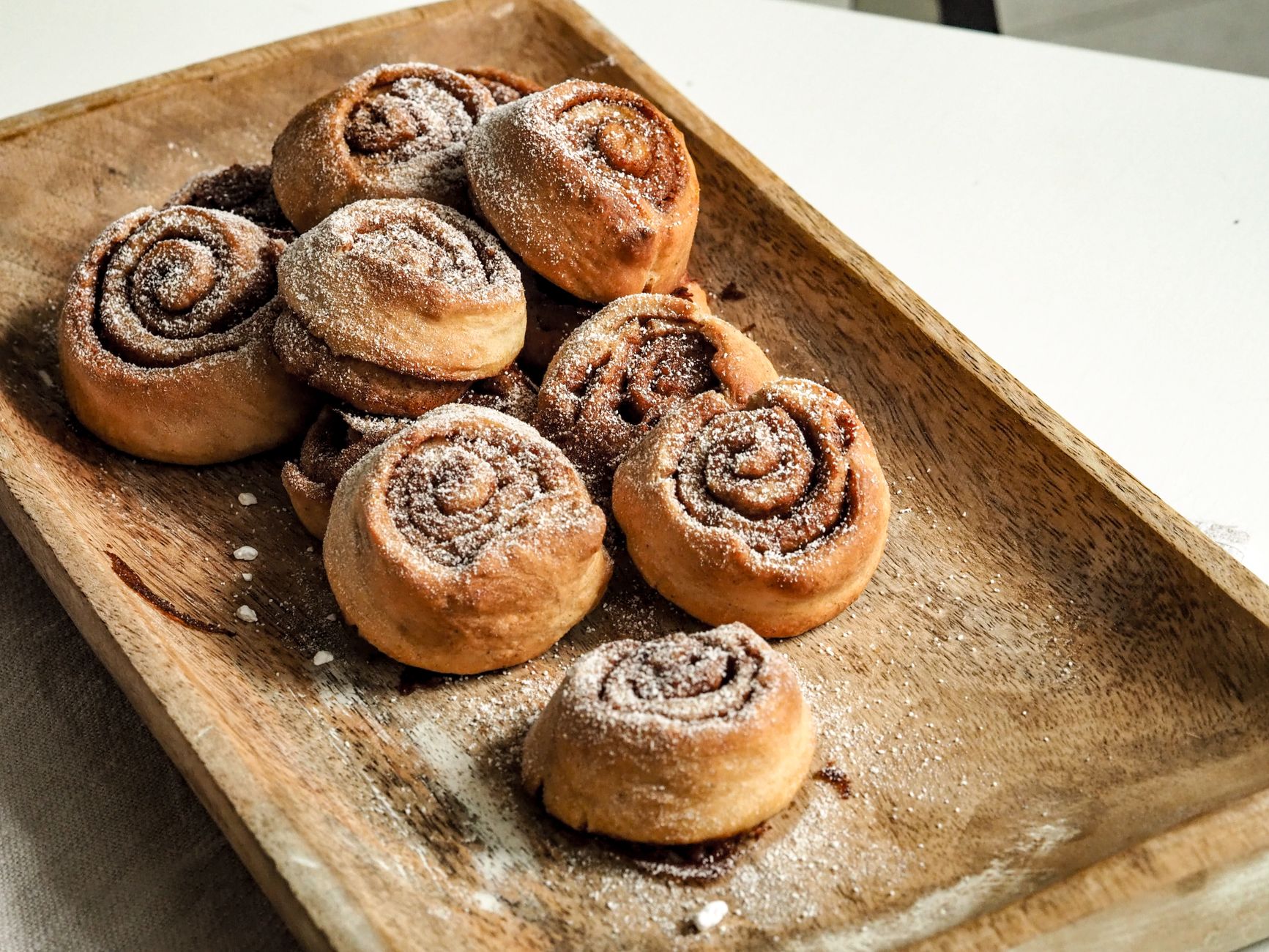
Here’s what goes into soft, gooey keto cinnamon rolls, and why each ingredient matters.
For the dough:
- Mozzarella cheese — the base of the classic “fathead dough,” giving it that stretchy, bread-like texture
- Cream cheese — softens the dough and adds richness
- Almond flour — the main structure; use finely ground, blanched almond flour for the best texture
- Coconut flour — just a small amount helps absorb moisture and firm up the dough without making it dense
- Eggs — bind everything together and help the dough rise slightly
- Baking powder — the main leavening agent for lift
- Instant yeast (small amount, for flavor only) — adds that “bready” taste real cinnamon rolls have
- Butter — for richness and softness
For the cinnamon filling:
- Butter, softened
- Cinnamon — good quality, freshly bought if possible
- Brown sugar keto sweetener — a monk fruit or allulose-based brown sugar substitute works best for a caramel-like filling
For the frosting:
- Cream cheese, softened
- Butter, softened
- Powdered keto sweetener
- Vanilla extract
- Heavy cream — thins the frosting to the perfect drizzle consistency
Substitution ideas:
- No mozzarella on hand? Provolone works in a pinch, though the texture is slightly different.
- Want it nut-free? Sunflower seed flour can replace almond flour, though the dough will be slightly more delicate.
- Dairy-free? Use dairy-free cream cheese and a plant-based butter, though the dough won’t stretch quite as easily.
Kitchen Equipment
- Large mixing bowl
- Microwave-safe bowl (for melting the cheese)
- Rolling pin
- Parchment paper
- 9-inch round or square baking pan
- Sharp knife or unflavored dental floss (for cutting clean rolls)
- Hand mixer or stand mixer (for the frosting)
- Measuring cups and spoons
Step-by-Step Instructions
Preparing the Dough
Start by melting the mozzarella and cream cheese together in the microwave in 30-second bursts, stirring between each one, until smooth and fully combined. This is the base of your dough, so take your time here — lumps of unmelted cheese make the dough hard to work with later.
Once smooth, mix in the egg, almond flour, coconut flour, and baking powder. If you’re using the yeast for flavor, sprinkle it in now. Stir until a shaggy dough forms, then knead it gently with your hands (lightly wet hands help prevent sticking) until it comes together into a smooth ball.
Let the dough rest for 5 to 10 minutes. This step matters more than people think — it lets the flours fully hydrate, which makes rolling much easier and helps prevent cracking.
Making the Cinnamon Filling
While the dough rests, mix the softened butter, cinnamon, and brown sugar sweetener together until it forms a spreadable paste. It should look thick, like a soft caramel spread, not runny.
Rolling the Dough
Place your dough between two sheets of parchment paper and roll it into a rectangle about a quarter-inch thick. Keeping the thickness even is key — thin spots will tear, and thick spots won’t cook through properly.
Spread the cinnamon filling evenly across the dough, going all the way to the edges except for one long side (leave about an inch bare so the roll seals properly).
Cutting Perfect Rolls
Starting from the filled edge, roll the dough tightly into a log, using the parchment paper to help guide it. Once rolled, use a sharp knife or a piece of unflavored dental floss to slice the log into rolls about an inch and a half thick. Floss gives you cleaner cuts without squishing the dough.
Proofing
Since this dough rises with baking powder rather than yeast, you don’t need a long proof. A short 10-minute rest in the pan before baking helps the rolls relax and settle in place.
Baking
Arrange the rolls in your prepared pan, leaving a little space between each one so they have room to expand. Bake at 325°F for 18 to 22 minutes, until the tops are golden and the centers are set but still soft.
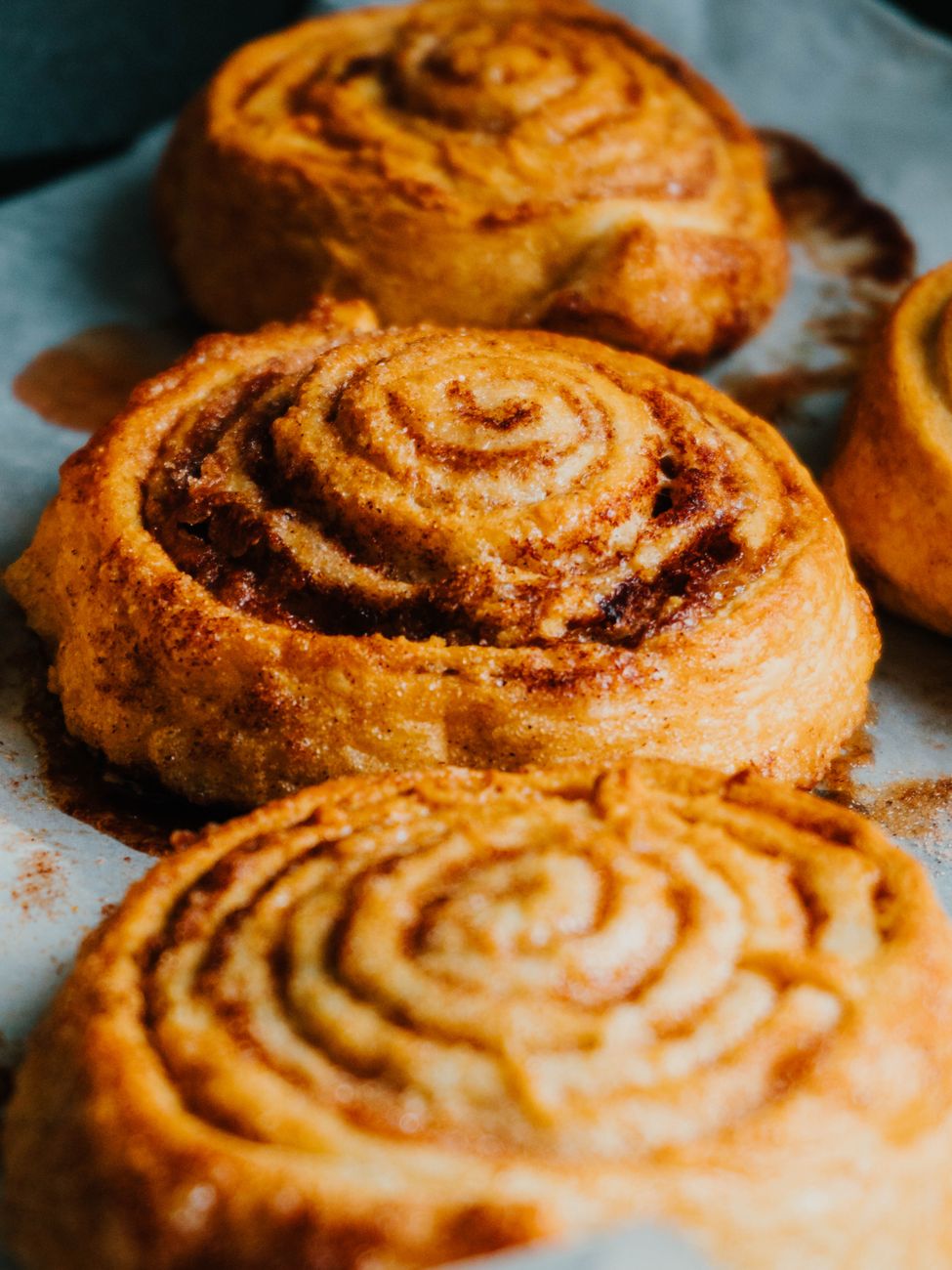
Visual cue to watch for: the rolls should look slightly puffed, with the filling bubbling gently at the edges, and the tops should be a warm golden brown, not deep brown.
Making the Cream Cheese Frosting
While the rolls bake, beat the softened cream cheese and butter together until fluffy. Add the powdered sweetener and vanilla, then mix in the heavy cream a tablespoon at a time until you reach a smooth, pourable consistency.
Frosting While Warm
This part matters: frost the rolls while they’re still warm, not hot and not cold. Warm rolls let the frosting melt slightly into the swirls, giving you that classic gooey, glossy finish. If the rolls are too hot, the frosting turns into a thin puddle. If they’re cold, it just sits on top like a cap.
Expert Tips for Soft & Gooey Keto Cinnamon Rolls
- Use blanched, finely ground almond flour — coarse almond flour makes the dough grainy.
- Weigh your ingredients if you can. Keto baking is far less forgiving than traditional baking when it comes to ratios.
- Don’t skip the coconut flour. Even a small amount changes the texture significantly.
- Let the cheese dough cool for a minute before adding the egg, so it doesn’t scramble.
- Keep your hands slightly damp when kneading to prevent sticking.
- Roll the dough between parchment sheets, not directly on the counter, for easier cleanup and less sticking.
- Use room-temperature butter for the filling — cold butter won’t spread evenly.
- Don’t overfill; too much filling makes the rolls hard to roll and causes leaking.
- Cut with floss for cleaner slices and rounder rolls.
- Give the rolls breathing room in the pan.
- Bake at a slightly lower temperature than you’d expect — keto dough browns fast.
- Check doneness at the center roll, not the edges, since edge rolls cook faster.
- Frost while warm, never hot.
- Store leftovers frosted or unfrosted, whichever you prefer, but unfrosted rolls freeze better.
- If your dough feels too soft to roll, chill it in the fridge for 10 minutes first.
Honestly, most of these lessons came from trial and error in my own kitchen. If you’d rather skip the guesswork altogether, The Ultimate Keto Baking Bundle is built around exactly this kind of troubleshooting — tested ratios and techniques for keto breads, rolls, and pastries so you’re not left wondering why your dough won’t behave.
Biggest Mistakes to Avoid
Dry dough. Usually caused by too much almond or coconut flour, or not enough fat. Add a small splash of cream or an extra egg yolk to bring it back together.
Dense rolls. Often from overmixing or using coarse almond flour. Mix just until combined and use fine, blanched almond flour.
Rolls don’t rise. Check that your baking powder is fresh — it loses potency over time. Also make sure your oven is fully preheated before baking.
Burnt bottoms. Move your pan to a higher oven rack, or place a second empty pan underneath as a heat buffer.
Filling leaks. This usually means the filling was too thin or the rolls weren’t sealed tightly enough when rolled. Make sure your cinnamon mixture is a thick paste, not runny.
Dough tears while rolling. The dough is probably too cold or wasn’t rested long enough. Let it sit a few extra minutes at room temperature.
Rolls spread too much. This can happen if the dough was too warm and soft when cut. Chill the rolled log for a few minutes before slicing.
If troubleshooting recipes on your own feels overwhelming, this is another spot where The Ultimate Keto Baking Bundle comes in handy — it includes tested recipes for common keto bakes so you’re working from a reliable starting point instead of guessing.
Delicious Variations
- Pumpkin keto cinnamon rolls — add a couple tablespoons of pumpkin puree to the dough for a fall twist
- Pecan cinnamon rolls — sprinkle chopped pecans over the filling before rolling
- Chocolate cinnamon rolls — add a thin layer of unsweetened cocoa powder to the filling
- Maple glaze — swap the frosting for a maple-flavored keto glaze
- Caramel drizzle — drizzle a sugar-free caramel sauce over the top after frosting
- Orange cream cheese frosting — add fresh orange zest to the frosting for a citrus twist
- Protein cinnamon rolls — mix a scoop of unflavored whey or collagen protein into the dough (you may need a touch more liquid)
What to Serve with Keto Cinnamon Rolls
- A hot cup of coffee
- A creamy keto latte
- Herbal or black tea
- Savory egg muffins for balance
- Crispy bacon on the side
- A bowl of full-fat Greek yogurt
- A berry smoothie made with unsweetened almond milk
Storage Instructions
Room temperature: Unfrosted rolls can sit covered for up to 2 days.
Fridge: Frosted rolls keep well in an airtight container for up to 5 days.
Freezer: Freeze unfrosted rolls individually wrapped for up to 2 months. Thaw overnight in the fridge before reheating.
Reheating: Warm in the microwave for 15 to 20 seconds, or in a 300°F oven for about 8 minutes, until soft again.
Meal prep tip: Make the dough and filling ahead of time and store separately in the fridge for up to 2 days before rolling and baking fresh.
Nutrition Benefits
These keto cinnamon rolls are naturally low in carbs, sugar-free, and made with wholesome fats that help keep you full longer than a traditional pastry. Because they skip refined sugar and white flour, they’re a much friendlier option for anyone watching their blood sugar, including diabetics looking for a treat that won’t cause a spike.
They’re also naturally gluten-free, since almond and coconut flour replace wheat entirely. And thanks to the combination of cheese, eggs, and healthy fats, one roll tends to be more satisfying than an entire traditional cinnamon bun, which means less temptation to go back for seconds.
Frequently Asked Questions
Can I freeze keto cinnamon rolls? Yes. Freeze them unfrosted, wrapped individually, for up to 2 months. Thaw in the fridge overnight before reheating.
Can I use only coconut flour instead of almond flour? Not as a direct swap. Coconut flour absorbs far more liquid than almond flour, so you’d need to significantly reduce the amount and adjust the wet ingredients. It’s best used as a small addition, not the main flour.
Can I make these dairy-free? Yes, with dairy-free cream cheese, butter, and a plant-based mozzarella alternative, though the dough will be slightly less stretchy.
How many carbs are in one keto cinnamon roll? This varies based on your exact ingredients and roll size, but most keto versions land in the low single digits of net carbs per roll when made with almond flour and sugar-free sweeteners.
Why is my dough sticky? This usually means the cheese mixture was still warm when you added the flour. Let it cool slightly, and keep your hands damp while kneading.
Can I prep the dough overnight? Yes. Make the dough and filling separately, store them covered in the fridge, then roll and bake fresh the next day.
Can kids eat these? Absolutely — they’re a great lower-sugar treat for kids, though always check individual ingredient labels if there are allergies involved.
How long do keto cinnamon rolls last? Up to 5 days in the fridge when frosted, or 2 days at room temperature unfrosted.
Can I use monk fruit sweetener instead of erythritol? Yes, monk fruit blends work great and tend to give a smoother texture than straight erythritol.
Can I microwave leftovers? Yes, 15 to 20 seconds is usually enough to soften them back up without drying them out.
Want Perfect Keto Baked Goods Every Time?
If this recipe has you excited to bake more keto treats, I get it — once you nail one recipe, you start wanting to recreate everything you used to miss. That’s exactly the rabbit hole I went down, and it’s why I eventually picked up The Ultimate Keto Baking Bundle.
Instead of testing recipe after recipe on your own (and wasting almond flour along the way), the bundle gives you a library of professionally tested keto recipes covering breads, cinnamon rolls, cookies, cakes, bagels, pizza crusts, muffins, and more. Everything is built around the same principles that made these cinnamon rolls work — the right ratios, the right sweeteners, and techniques that actually hold up in a home oven.
It’s especially useful if you’re still new to keto baking and want to skip the trial-and-error phase most of us went through. Rather than guessing your way through dense loaves and dry cookies, you get a shortcut straight to the good stuff.
If you’re serious about keeping keto treats in your regular rotation, it’s worth checking out: Get The Ultimate Keto Baking Bundle here.
Final Thoughts
Soft, gooey, sugar-free cinnamon rolls on keto aren’t just possible — they’re genuinely delicious once you know the right techniques. Give this recipe a try this weekend, and don’t be afraid to make it your own with one of the variations above.
If you loved these, do a fellow keto baker a favor and share this recipe with them. And if you want to save yourself some future trial and error, The Ultimate Keto Baking Bundle is a genuinely helpful resource for anyone who wants to keep building out their keto baking skills, one delicious recipe at a time.
Happy baking — and enjoy every gooey, cinnamon-swirled bite.
